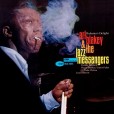
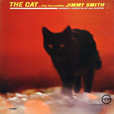
Unmissable Jimmy Smith. With Stan The Man and Kenny Burrell, the perfect foils, in 1963.
The LP is in Blue Note Classic Vinyl series: ‘all-analogue’, mastered by Kevin Gray from the original master tapes. The ‘Ultimate HQ CD’ is from Japan, using the recent Craft transfers and mastering.
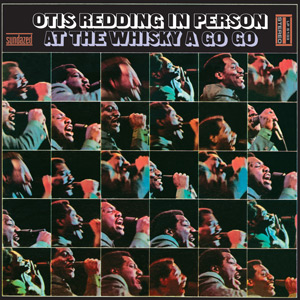
Perhaps her greatest LP, recorded at FAME in Muscle Shoals, Alabama, with Rick Hall and the gang, released by Cadet in 1968. A handful of belters, a couple of Don Covay songs, excellent interpretations of Steal Away and Otis’ Security… the marvellously sympathetic musicianship of Carl Banks, Roger Hawkins, Barry Beckett and co… and the almighty I’d Rather Go Blind.
Larry Marshall and Alvin Leslie, backed by The Revolutionaries and blazing horns, produced by Alvin Ranglin.
Accomplished late-seventies reggae, never properly released till now; shot through with Marshall’s moody intensity and craftsmanship.
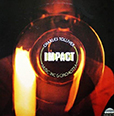
His startling set of duets with Larry Young in 1977. On the first three, he plays piano, with Larry Young on organ and synthesizer. With a romantic flourish, he does justice to Trane’s After The Rain, alone at the keyboard. Then Young ‘takes over, cranking out hard-driving riffs that owe more to the hard rock of Deep Purple and Atomic Rooster than Jimmy Smith, as Chambers lays down a thundering backbeat full of high-impact tom rolls. Out of print for decades, this wild album’s reemergence is long overdue’ (The Wire).
Check your Bobby Hutcherson Blue Notes from the late-60s — records like Oblique and Spiral — for how Joe Chambers bends them round the wall and into the top corner, with his musicianship and compositions both.
Premier sampled Mind Rain for Nas’ NY State Of Mind (to put you out of your misery).
Very warmly recommended.
A suite of revolutionary anarchist songs from the Spanish Civil War — featuring Don Cherry, Roswell Rudd, Gato Barbieri, Dewey Redman and guitarist Sam Brown — plus Ornette’s War Orphans, three works by Carla Bley (who arranges brilliantly), and two by the great bassist himself, in tributes to Che Guevara and protests against the Vietnam War, on his tumultuous, bracing, expansive first outing as leader, in 1970.
From 1973, the first of her recordings as a duo with Areski. ‘Deeply rooted in North African and European folk traditions… evocative vignettes with breezy vocals and minimal accompaniment of classical guitar, strings and woodwinds… One of their best-loved albums, for its remarkable sense of intimacy… beckoning listeners into a strange and beautiful world.’
Five-star business. With James Spaulding, Freddie Hubbard, Herbie Hancock, Ron Carter and Joe Chambers, in 1965. The first side is all Hutcherson compositions — including Little B’s Poem, his lovely signature tune, written for his toddler Barry — the second all Chambers’, more abstract and reaching.
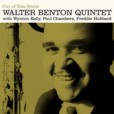
The 1957 recording with Paul Chambers and Philly Joe Jones.
In truth this is just prior to the formation of Liquid Liquid, in 1981. Like a no-wave, Saturnian version of Raymond Scott’s big band. The punks at the London Musicians Collective would have loved them.
LI played various NYC lofts and clubs, including Tier 3, Mudd Club and CBGB. Audience members were encouraged to bring their own instruments along. Idiot Orchestra was an offshoot involving more than a dozen players — clarinet, saxophone, trumpet, violin, cello, synth, bass, marimba and drums.
With a fanzine featuring rare photos and a new interview with Richard McGuire.
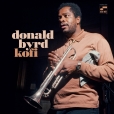
‘One of the most essential hard bop purchases in the canon. The performances by Duke Pearson — four of his own tunes, five by Byrd, and standards — showcase his improvisational acumen at its height. His soloing on studio records pales in comparison. This was a hot quintet, that not only swung hard, but possessed a deep lyricism and an astonishing sense of timing’ (Allmusic).
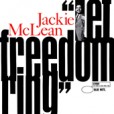
Thrilling, angular hard bop, impatiently itching itself open to the new thing.
Dolphy plays b-flat clarinet and alto; Ron Carter plays cello. Booker Ervin is rawly eloquent as per. The seven compositions are all by Waldron, who centres proceedings with inimitable brilliance.
Feelingly recorded by Van Gelder in the summer of 1961, in the same few weeks as Ron Carter’s Where.
In this iteration — all-analogue remastering from the master-tapes, tip-on sleeve, first-class pressing — it’s a must.
‘Verve By Request.’
Thrillingly uncontainable, uproarious, wildly creative music, teeming with passion, protest, sex, orality, dread, blues, and the gospel truth. With Roland Kirk newly enrolled, Mingus passes his bass to Watkins… and it all kicks off. We can’t recommend this record strongly enough. It will do you good.