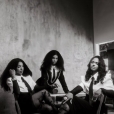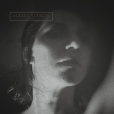




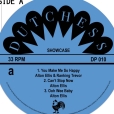
‘Recordings from early 2025, while Johnny was bed-bound in an assisted living facility with multiple sclerosis. He speaks into an iPhone laid gently on his chest, in remarkably tender and emotive form. Love in all its permutations. The tangled, but caring nature of familial love, to the anguish and euphoria of romantic connection. Johnny has a remarkable ability to pose questions, and answers, that reflect the truest of realities, without cliche.
‘Joel Nelson nimbly helms the nearly entirely electronic backdrop, with Buchla Music Easel bubbling up between Johnny’s stream of consciousness. At times, Broadcast’s fuzzed out ballads come to mind, while at others, early Oneohtrix Point Never’s gauzy, distant drones cast anchor beneath the slippery syntax.’
This 1954 vocal LP was the trumpeter’s idea. Pretty much everyone in the studio was sceptical, but Baker stuck to his guns during the numerous takes required to iron out his tuning. ‘I thought it was bullshit,’ recalled his close collaborator, pianist Russ Freeman. ‘Louis Armstrong and Jack Teagarden sang like jazz singers. This was ballads. Totally meaningless.’ Metronome magazine pilloried Baker’s ‘abysmal vocal deficiencies’, like ‘a four-month-old baby’s lack of coordination because he can’t walk.’
Punters loved it. The same year, audience polls in Down Beat magazine made him best trumpeter and best vocalist, above Miles Davis and Nat King Cole. This LP became his best-seller, over the decades. Its version of My Funny Valentine is arguably definitive.
The sexual and racial politics of its reception run fascinatingly deep. Baker’s ‘white’, ‘effeminate’ singing style demurs a throw-down with ‘expressive’, ‘black’ machismo. (Bob Dorough, Mose Allison, and Michael Franks are fellow travellers.) ‘A lot of people thought — foolishly so — that because of the way I sang, I, y’know, liked fellas or something,’ Baker once remembered, nervously. According to his biographer James Gavin, the album made him the first jazz musician with a ‘strong homosexual following’. Pacific Jazz producer Dick Bock’s marketing survey in 1955 found that most of Baker’s fans were women who wanted to hear him sing. It was a massive hit in Brazil, too, coursing into the bossa nova movement via admirers like Joao Gilberto and Nara Leao.
‘Richly harmonic explorations in just intonation, using a sparse but finely detailed palette of organic atmospheres, metallic shimmer and off-kilter rhythms. Sample-based hip-hop, the minimalism of Terry Riley and Jon Hassell, as well as dub techno and post-rock; all in the house. Glassy pads, gamelan metallophones, clarinet and guitar dissolve into fluid, dreamlike forms, suggesting vast coastal landscapes, charged air, the calm after a storm…’
Norway’s finest hardanger fiddle player, performing traditional tunes from her native valley Hallingdal.
Wonderful.
‘Oud-player with The Handover, Eissa was mentored by two legendary figures in Egyptian music: composer and multi-instrumentalist Abdo Dagher, and oud master Hazem Shahin. The music here is heavily rooted in both Egyptian classical music and a number of different folk music traditions, but it goes its own way, through expansive and intricate original compositions.
‘The epic title track, with Eissa playing oud exclusively, takes up two thirds of the album. It seamlessly transitions into heart-stopping recitation of the thirteenth century poet Baha´ al-din Zuhayr… serious, loving, tender and insistent, all at once. Visionary and virtuosic, but at the same time warm and close.
‘A future classic.’
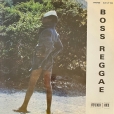
‘Our long overdue return to the Chopper label, which we first reissued way back in 2010. This twelve song LP corrals all our favourites we haven’t previously revived. A mix of early ‘80s style live rhythms laid at Channel 1 and some great classical late ‘80s digital style. Lionel Barrett was the original and perhaps the core artist of the Chopper stable, and is featured heavily here. A few of his tracks as well as a couple of others here are now issued on vinyl for the first time. The remaining are retrieved from long out of press albums and singles. A great overview of a prolific JA-NYC label from dancehall’s best era.’
Over to Digikiller…
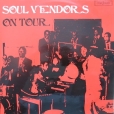
‘Howard ‘Sir Tommy’ Mapp is one of the original guard of New York sound men, playing sound system since 1974. Around a decade after that, he began producing for his newly formed label of the same name. Later in the 1990s he established his own studio, which became a hub of the city’s dancehall scene. In true independent fashion, Tommy covered nearly every aspect of the reggae business himself, like Wackie’s, Jah Life and Philip Smart. We’re proud to finally present the first reissue of the early gems in Tommy’s catalogue and make some more classic New York reggae accessible again. So what better to start with than a new compilation, 100% heaters, culled from long unavailable singles and albums. We cannot recommend this record enough, as Tommy’s early production output mainly falls in two of our most beloved categories — the mid ‘80s sound of Channel 1 as played by the Gifted Roots Band, and the late ‘80s early digital sound. This LP is packed with prime cuts of just such music. Absolutely essential stuff for 1980s reggae heads.’