
Your basket is empty

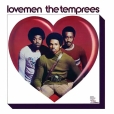
The superb Memphis vocal trio, powered by the sublime falsetto of Jasper ‘Jabbo’ Phillips.
Giddily soulful, ravishing slow jams and sweeter-than-sweet harmony overtures. Paradigmatic murder like If I Could Say What’s on My Mind, Love… Can Be So Wonderful, and I Love You, You Love Me. An all-conquering version of Dedicated To The One I Love, to cap it off.
We love The Temprees.
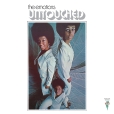
‘Girl group greatness, courtesy of the Chicago-based Hutchinson Sisters (with Theresa Davis on this record) and co-producers Isaac Hayes, David Porter and Ronnie Williams. Recording at Muscle Shoals and Stax seems to have added a little grit to The Emotions’ sound, too; this 1971 classic on the Volt label offers the perfect blend of sweet and sassy. Show Me How was the hit, but it’s Blind Alley that made Untouched one of the most collectible albums of its kind: that track’s one of the most sampled in all of pop and hip hop, most notably by Big Daddy Kane (Ain’t No Half-Steppin’) and Mariah Carey (Dreamlover).’
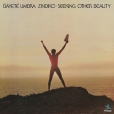
‘After keyboardist/composer Bayeté aka Todd Cochran established his musical presence on the San Francisco scene playing in Bobby Hutcherson’s band, and before becoming a key member of the innovative band Automatic Man, which he co-founded with Santana drummer Michael Shrieve, he recorded a couple of solo albums for the Prestige label that feature some of the most far-out, futuristic music the legendary jazz imprint ever released… Early ‘70s electric Miles is a clear point on the compass, but so are Parliament-Funkadelic and Lonnie Liston Smith, if he were playing a fuzzed-out clavinet instead of a Fender Rhodes.’
“While I’ve held space for the blues aesthetic and jazz in everything I’ve done, I was leaving one world and entering another, unmooring the ship and heading into a sea of unknowns, so to speak.”
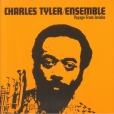
‘There are relatively few places where members of the two great Arkestras — Ra’s and Tapscott’s — cross paths… As you might expect from such a line-up, Voyage From Jericho does not have a wasted note. Every light is most definitely on, the band are running hot, and the spirits are live in the set. Tyler’s compositions are ruggedly carved, heraldic and open; he leads on baritone, sculpting the songs, growling out blue-flamed multi-phonics, the flow in full spate. Boykins steps lightly with his familiar elasticity and glowing presence; Blythe and Cross duck and weave, and Reid clatters and baffles, following and leading, echoing and supporting, always right there in his sui genesis super-precision time-beyond-time. Top-tier fire music.’ (Francis Gooding, The Wire)
Scorcher!
The double LP is an anniversary edition, with extras, and new artwork.
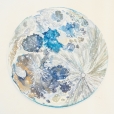
‘Marvelling, playful, inquisitive contemplations, ranging from the stardust that forms us to the very first human sound that reverberated through a cave; ambient, liminal narratives woven by poetic recitation and Buchla, bass and sitar, edging towards blues and spiritual jazz.’
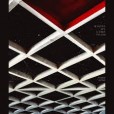
Recent collaborations in London with Nubya Garcia, Joe Armon-Jones, Soweto Kinch, Ashley Henry, Daniel Casimir and Kamaal Williams… remixed live the next weekend by LeFtO, Ben LaMar Gay, Quiet Dawn, Earl Jeffers & Don Leisure of the Darkhouse Family, and later by Emma-Jean Thackray and Lexus Blondin… finally chopped-up and re-assembled back at Makaya’s home studio in Chicago, into two continuous side-long suites.
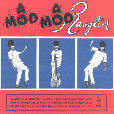
Instrumentals in ska, mento and other Caribbean styles recorded in 1966, at the threshold of rocksteady. The only one of his eight Federal albums to feature ska. Super-fine LP from Dub Store.
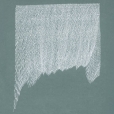
Two spellbinding extended improvisations referring to meteorological and planetary phenomena: evocations of light, wind, clouds, and tidal cycles as shimmering, roaring, rubbing, coalescing and diverging environments of sound; consistent and yet in perpetual flux. The quartet’s signature, singular, honed minimalism subsumes flashes of chaos into winding paths of musical detail; hushed but suspenseful.
Quietly ravishing, stunning music from Norway, by trumpeter Torstein Lavik Larsen, double bassist Adrian Fiskum Myhr, guitarist Fredrik Rasten, and drummer Jan Martin Gismervik.
Gorgeously presented, in a tiny run.
Warmly recommended.
Something else.