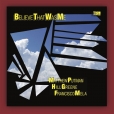

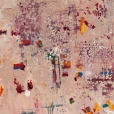
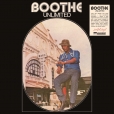
A baker’s dozen of rare or unreleased dub instrumentals by Augustus Pablo at the height of his powers, mixed at King Tubbys.
First the set of Prince Philip dubplates from Digikiller, stateside; now this from Only Roots in France.
Biff!... Baff!
Knockout stuff.
‘The first studio encounter between London-based duo Exotic Sin and Swiss percussionist Julian Sartorius. Six improvisatory paths, building at a relaxed pace; tactile and stripped-back, with room for the listener to enter into their evolving sound. Anchored by piano, delicate wood, metal, and air instruments, a fluid system of interactions develops: repeating, deepening, never fixed; not cyclical or linear, eschewing the guard-rail of recurring motifs; broad, forward-looking, and fleet of foot.’
Double helpings of riotous, classic dancehall recorded for Jah Thomas’s Midnight Rock label, but previously only issued as a promotional white label. The rhythms are by the Roots Radics, at Channel One. One side each for the deejays, brandishing lyrical cutlasses fit to kill. Early days for Super Cat, but his irresistible rise is already up in your face, plain as day.
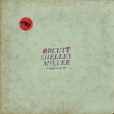
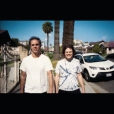
‘Quietly multi-rhythmic, modular-trance-meets-processed-and-unprocessed-chamber strings, bewitching and bewildering field recordings all knitted tightly, an LA patchwork.’
“Our studios are side-by-side. When we were writing this album, you might have found us tracking viola stacks in one studio while, in the other, we were writing through-composed themes and rearranging the material. Granular synthesis and tape manipulation are key tools we use to create variation and movement in a composition. This process often yields surprising results, capturing the emotion but expressing it in unexpected ways. It feels essential that we embrace a bit of chance.
“In contrast to our first album, Recordings from the Aland Islands, we wanted this music to feel very present. Where Recordings was intended to transport you to another place, Different Rooms is meant to meet you where you are. It’s a decidedly urban album. The field recordings were captured on rain platforms, in city streets, in rooms at home, and intentionally paint a quotidian sonic image, blurring the line between what you hear in your own environment and what is on the record.”
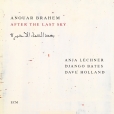
Featuring Jeff Parker.
This is terrific; warmly recommended.
‘Brìghde Chaimbeul is a leading purveyor of celtic experimentalism and a master of the Scottish smallpipes; a bellows-blown, mellower cousin to the famous Highland bagpipes. A native Gaelic speaker, Brìghde roots her music in her language and culture. She rose to prominence as a prodigy of traditional music, but has since begun a journey to take the smallpipes into unchartered territory. She has devised a unique way or arranging for pipe music that emphasises the rich textural drones of the instrument; the constancy of sound that creates a trance-like atmosphere, played with enticing virtuosic liquidity. She draws inspiration from the world of interconnected piping traditions, but her most recent album brings in influence from ambient, avant garde and electronic music.’
A lovely, fresh, intimate, uncluttered blend of nu soul and glo-fi, from Brighton.
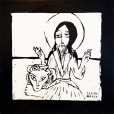
Roiling, cascading, highly charged, deeply emotional piano improvisations by this Dutch-born, Columbia-trained chemist, who was an early follower of Gurdjieff.
Nyland released sixteen transcendent albums — nowadays pretty much vanished — of spiritual pianism on his own Gage Hill Press, starting in the mid-sixties. Each LP came with stunning woodcut artwork by Nyland’s wife, Ilonka Karasz (who also designed covers for the New Yorker); and highly refined black-and-white photography.
Piano Studies 337 is a particularly tempestuous performance that Nyland himself recommended to Ansel Adams as a good entry-point to his music.
Heavy Al Campbell productions given the golden touch by three master engineers — Channel One dons Stanley ‘Barnabas’ Bryan and Lancelot ‘Maxie’ Mackenzie, and the one and only Hopeton Brown.
It was Al Campbell who produced Linval Thompson’s classic sides. Barnabus started up with Channel One when he was still at school; he was deejay for the sound; he learned mixing from Tubby; Sly taught him drums. Maxie was the technical whiz who built Channel One’s studio and sound-system amplifiers.
Originally out on Silver Kamel in 1981.
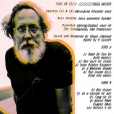
‘Deep and haunting; a dense tapestry of layered percussion, time-warped tape loops, and spiralling drumgita figures, all underpinned by hypnotic improvisations from Brazilian pianist Rafael Dos Santos. Privately pressed in 1982, it is both ecstatic and unsettling, a landmark recording in black British experimental music.’
A reissue of Vambe’s privately pressed album from 1982.
‘Occasionally, you find music outside the commercial mainstream, outside of everything – the music of visionaries, eccentrics, inventors, loners. Moondog, Daphne Oram, Harry Partch are from this mould. And so too is Lori Vambe.
‘A self-taught drummer, inventor, and sonic experimentalist, who moved from Harare to London in 1959, Vambe is a unique figure in British music. The creator of his own instrument, the drumgita (pronounced ‘drum-guitar’) or string-drum, Vambe intended to create a kind of music that had never been made in order to pursue access to the fourth dimension. The album plays with time, mixing hypnotic, trance-like drumgita pieces with the same segments played backwards. You can hear echoes of African drumming traditions, minimalist repetition, and tape-manipulated musique concrète— but ultimately, the album defies genre. It is a solitary voyage, spiritual and futuristic.’
“An album of what one might consider Danish Spiritual Jazz, with songs inspired by and named for Pharaoh Sanders and Yusef Lateef” (Egon, Now Again).
“I’ve never come across an original of this Norwegian spiritual jazz masterpiece but happy enough with the reissue. They’ve put some work into it to make it sound and look good”
(Gerald Short, Jazzman).
“Killer spiritual jazz album from Denmark, superb repress” (Gilles Peterson, BBC Radio 6).
This quartet formed in 1969, and played for a while every Monday in the famous Jazzhouse Montmatre in Copenhagen. This is their sole record, released in 1970.
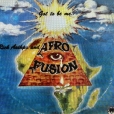
A beguiling, one-of-a-kind blend of country, township jazz, and pop, from the heart of Zambia’s freedom movement, by ‘the first African voice on the radio for many Central Africans and the first kind of pop star for many Central Africans.’
Vocalist, guitarist, and bandleader Alick Nkhata moved effortlessly between lonesome country slide, big band pop, and air-tight vocal harmonies, all with roots in Bemba and other African traditional songs and rhythms. It’s a dizzying, inclusive, expansive blend from an artist and music archivist who became the voice of his nation’s fight for freedom. The lyrics and music represent the times — lonesome country laments like Nafwaya Fwaya and Fosta Kayi drift along the railways to urban centers and copper mines. Nalikwebele Sonka (I Told You Sonka) pairs honey-soaked yodels with a warning about the downward spiral of unemployment in townships, while Mayo Na Bwalya (Mother of Bwalya) is a mother’s plea to a traditional songbird for guidance of her wayward son. Songs like Shalapo, Kalindawalo Na Mfumwa, and his biggest hit, Imbote, infuse piano, big band horns, and even early electronic instruments into stunning syncretic pop masterpieces.’
‘It’s great that Zamrock is so well known for its incredible story and music, but that intense focus has a way of flattening the diversity of Zambian music and its history. So maybe we can’t necessarily say that Alick Nkhata led to Zamrock, but that rich history of mixing influences and creating new sounds in the copper belt started with Alick in lots of ways. All of that stuff is what people appreciate about Zamrock — that it was mixing sounds and that it was political in its own way. There’s a long history of that approach in the region, and it starts with Alick.’