




Your basket is empty

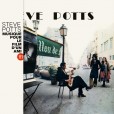
This saxophonist came through with the likes of Roy Ayers and Joe Henderson in the sixties, before hooking up with Steve Lacy in Paris in 1973. In this soundtrack composed for a film by his friend Joaquin Lledó — entitled Le Sujet Ou Le Secrétaire Aux Mille Et Un Tiroirs — he was joined by members of the group around Lacy, and diverse co-conspirators including friends from the funk outfit Ice, French accordionist Joss Bassellion, and none other than Jef Gilson at the mixing desk. It’s a dazzling, intensely entertaining blend of modal, cosmic and spiritual jazz, free funk, dirty grooves, heavy jams, bistro boogie and Javanese wah-wah.
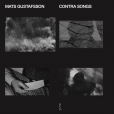
‘Alone at night. Large church room. Lots of air. Stone. Wood. Glass. Quietness. Stillness. The dead and the alive. Surroundedness.
‘Existentialistic matters spinning. Peaceful state of mind. The dialectic equilibrium of complete stillness and deeper thoughts on contra-resistance on local and global levels. Fighting (y)our stupidities. Contra.
‘I have never ever before gotten myself into such an unusual setting for a recording project. And yet, so simple. So naked. So peaceful. Alone at night. As we all are.
‘I borrowed the keys to the beautiful church of Gustafsberg, from my neighbor Rune.
‘I went there at midnight. Set up my recording gear. Old school DAT machine, tube pre-amps and two AKG 414s in an extreme stereo set-up, close to the horn. The horn of choice. The contrabass sax. The monstrous sax-machine “Tubax” made by the German engineer Benedikt Eppelsheim at the turn of the century. I sat down in the first row of benches. Breathing. Preparing. Contemplating. The saxophone positioned in the very middle of the church, close to the altar. More than 6 hours straight of low-end sax noise and many breaks later: the sun set. At around 7 am… I was done. I was alone the whole night. And yet, not all alone. Some things were going on in that church. In that room. I kid you not. Never audible. But strongly felt. Whatever presence of the old or new gods - old and new dreams - it effected the music and my mind. I let it happen. I let it all flow.
‘Alone at night. There is nothing to explain.’
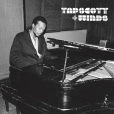
Sparse, contemplative, classy, playful, deep jazz, recorded in 1983, with the focus on Tapscott’s brilliant piano-playing, accompanied by Aubrey Hart and Kafi Roberts on flute and saxophone. All-analogue; cut directly from the original master tapes. Tip-on sleeve.
Beautifully executed as usual by Gearbox, this is the first release of a 1968 BBC Jazz In Britain recording, forerunner of the classic Argo LP Heart Is A Lotus, issued two years later. With Don Rendell and Ian Carr.
Super-rare Chicago sweet soul LP, originally out on Arrow Brown’s Bandit label. ‘A string-laden fantasia straddling the street corner doo-wop of the ‘50s and the Me Decade’s studio excess. Backed by the Chosen Few and the Scott Brothers, arranged by Benjamin Wright, sung by Brown’s 17-year-old daughter Tridia and Moroccos falsetto Larry Brown.’ Lovey artwork by label-mate Eugene Phillips clinches the DIY, outsider appeal.

Digging yet deeper and more devastatingly in the gospel bins of the Black Atlantic, HGZII has its genesis in work undertaken for Kanye West and the Sunday Service in Wyoming, before enfleshment and fine-tuning back at home in the City of Angels.
The first time out for this near-mythical recording by the co-founder of the Tribe label.
Funky, spiritual jazz, with Phil Ranelin, Harold McKinney, Kareem Harris and the crew, in 1975.
Decent booklet, too, with a history of the label, and never-before-seen archival photos and rare ephemera from its mid-1970s heyday.
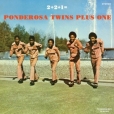
‘Two sets of identical teenage twins, Alfred and Alvin Pelham, and Keith and Kirk Gardner, along with Ricky Spicer. The group released a couple of singles and this lone album for Cleveland’s Saru label in 1971, breaking up and disbanding as adolescence waned. A recent sample darling of both Kanye West and Tyler The Creator, Bound has revealed the Ponderosa Twins Plus One as the real Midwest kid soul deal.
‘Freshly remastered from the original analogue tapes, adding two previously unissued bonus tracks; in a replica tip on sleeve.’
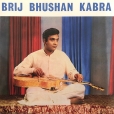
Brilliant, game-changing re-deployments of the lap-slide Hawaiian steel guitar — in this case a Gibson Super 400, modified with a drone string and a high nut to raise the strings off the fretboard like a lap steel — away from Indian popular music, into the service of ragas.

Originally out on the TK imprint Gospel Roots in 1978. We included the curtain-raiser Elijah Rock on our overview of the label, Christians Catch Hell.
Outstanding.
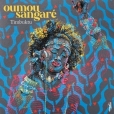
‘A stunning collection of songs, fusing her distinctive Malian sound and voice with elements of blues, folk and rock – resulting in a timeless body of work, free from borders and genres.
‘Written and recorded in the US during coronavirus lockdowns, the album is the latest chapter in an unparalleled musical epic which has seen an artist born in the poorest districts of Bamako, Mali, become the greatest and most influential African singer alive, as well as a powerful feminist icon.
‘Between the hometown pride exhibited in Wassulu Don, the quiet introspection of Degui N’Kelena, the amorous languor expressed on Kanou, the compassion in Demissimw and the sadness and frustration in Kêlê Magni, many emotions nourish this record, with common threads of courage and optimism woven throughout.’
‘The culmination of all his efforts thus far to mimic a synthesizer and drum machine. This seemingly impossible feat challenges Julian to experiment and develop a musical language that bridges the gap between organic timbres and electronic music. When listening to Mux, one might simply forget that the seemingly electronic sounds are only constructed organically via hand movements.
‘This is Julian’s second outing for Marionette, following Sulla Pelle with Valentina Magaletti in 2019.’