


Your basket is empty


Stark, moody, percussive amapiano.
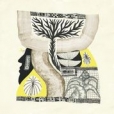
Absorbing new music from Ecuador, named after a street in the historic centre of Quito.
A poignant, trippy, astute, bass-heavy blend of a range of styles including juke, reggaeton and UK garage, flavoured by their to and fro between Latin America and Europe.
Quixosis’ grandad was a key, controversial player in the explosion of musica nacional in the city in the early sixties, and the mix is studded with evocative samples of Italian chanson and South American folk from his record collection, in a kind of reverie about national and self identity, Beat Konducted at the centre of the world.
Check it out.

Sonatas or concerti, says Threadgill: Come and Go for saxophone and cello; Poof for saxophone and guitar; Beneath the Bottom for trombone; Happenstance for flute and drums; Now and Then for tuba and guitar.
‘By this point, the group’s reliance on the serial intervallic system that was the basis of the group’s unique sound is more felt than prescribed, relying on the musicians to fill in the rest.
‘All the other hallmarks are here: unpredictable forms, percolating rhythms, the interwoven melodic strains; there’s really nothing else remotely like it.
‘The best part of it all is that Zooid is the one platform where one still gets to hear Threadgill really play. His keening saxophone wail retains that unmistakable gutbucket blues feel, with no small measure of church thrown into the mix.’
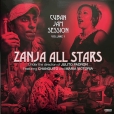
This is terrific.
Scintillating, masterful, roaring, classic Cubanismo, beautifully recorded in 2017 at the storied Areito Studio in Havana.
Descargas, jazz, boogaloo, son… and some ritual music to bring the curtain down. You’ll find yourself hungry for more.
The musicianship is dazzling in every corner of the orchestra; set on fire by the timbales of Changuito (from Los Van Van), and booted along by a hard-swinging, full brass section led by trumpeter Julito Padron, graduate of the legendary septet Nacional de Igacio Pinero, and later Irakere. The sound is steeped in tradition but by no means stuck in the past.
The vinyl is beautifully presented in a heavyweight, high-gloss gatefold.
Joyous, superb music; the real deal. Hotly recommended.
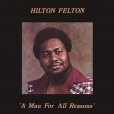
The 1980 LP by this versatile organist, mainstay of the Washington jazz scene, who played with everyone from Chuck Brown to George Benson. Featuring the funky dancer Bebop Boogie, teeming with jazzy elan, and replete with breaks ‘n’ beats opening and numerous breakdowns, school of Take Me To The Mardi Gras.
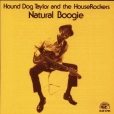
Rough, wild slide-guitar blues. “He couldn’t play shit, but he sure made it sound good,” was the guitarist’s verdict on himself.
Halfway through Sadie, his ex tells him straight: ‘Hound Dog, I can’t use you any more.’ Taylor cries his heart right out into three solos. Terrific.

Precious, late-eighties dance music from Mogadishu. Big group — three horns, four singers plus three backing, two guitars, keys, drummer, two percussionists, bassist — choca with funk swagger and highlife shimmy.
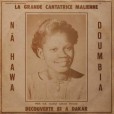
Beautifully direct Wassoulou songs by the twenty-year-old accompanied only by N’Gou Bagayoko on acoustic guitar.
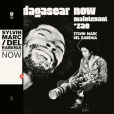
These two sharpened their musical skills in the celebrated seja-jazz band from La Réunion, Le Club Rythmique. In 1967 Sylvin Marc put out a terrific funk 45, saturated in James Brown. Later, he would play bass for Nina Simone on her album Fodder On My Wings, whilst Del Rabenja would work with Manu Dibango.
In these 1972 recordings for Jef Gilson’s Palme label, they are joined by their Madagascan compatriots Ange Japhet, Gérard Rakotoarivony and Frank Raholison — comprising the same group of five which lights up Funny Funky Rib Crib by Byard Lancaster and Soul Of Africa by Hal Singer & Jef Gilson.
The first side showcases the valiha harp-playing of Del Rabenja: three excursions in tribute to the great Rakotozafy, hypnotic and full of spirituality. The second side presents four compositions by Marc — free, grooving and cosmic.
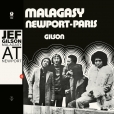
Jef Gilson, Sylvin Marc and his cousin Ange Japhet, Del Rabenja, Gérard Rakotoarivony and Frank Raholison, blending together bebop, sub-Saharan roots and electric funk.
Requiem Pour Django, Dizzy 48 and Anamorphose — renamed Salegy Jef after this re-routing via Madagascar — rejuvenate Gilson compositions from the previous couple of decades. Newport Bounce is a reworking of Interlude, recorded by Gilson in 1969 with Philly Joe Jones. Le Newport was a club in rue Grégoire de Tours, Saint Germain des Prés.
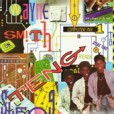
Even leaving aside the epochal title track, this is unmissable. Wildly original Jammys rhythms, cool as cucumber, with his old next-door-neighbour in full flow. Fire like E20, Like A Dragon, My Lord My God, Icky All Over…
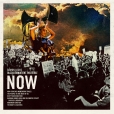
Recorded at the tail end of summer 2020, in the garden behind Chicago’s Experimental Sound Studio, by this collective of artists, musicians, singers, and dancers, including Angel Bat Dawid and Ben LaMar Gay.
“It was about offering a new thought,” says Locks. “It was about resisting the darkness. It was about expressing possibility. It was about asking the question, ‘Since the future has unfolded and taken a new and dangerous shape… what happens NOW?’”

An essential, five-star Blue Note; warm, lyrical and flowing. Adderley was in Miles Davis’ group at this time — over the next year they would record A Kind Of Blue and Milestones — and the trumpeter pays back generously, choosing the tunes, and playing at his very best.
‘Essential Vinyl’ series.
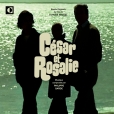
His soundtrack to Claude Sautet’s 1972 film, featuring Romy Schneider’s haunting voice-over of La Lettre De Rosalie. ‘Like a magical bridge between baroque and electronic music, mixing Moog synthesizer sequences with acoustic instruments.’