

Your basket is empty

“I didn’t want to make a bebop record. I wanted to make a modal jazz record and there just aren’t that many on viola. I wanted to speak with a heavier voice, more akin to a tenor saxophone. The viola is darker and thicker. It speaks slower.”
‘Love that, kind of Miguel Atwood-Ferguson, big orchestrations with really low down dirty jazz music” (Gilles Peterson).
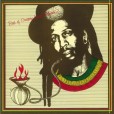
Mid-seventies Alvin Ranglin productions — an original LP, not a compilation — with the Revolutionaries deep in the groove, Sylvan Morris from Studio One at the controls, the Tamlins on backing vocals, and Deadly Headley and co chipping in tough brass.
Top Gregory, with classics like Jailer and Border.
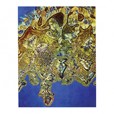
‘Bisk is back… as cheerfully unhinged as ever… absurd and exhilarating in equal measure. The Japanese producer’s drum programming weaves through knotty thickets of syncopated beats and white-noise bursts, chasing ghosts and dodging potholes. His samples are fragmentary dispatches from far-flung points, and any given musical phrase might shoehorn multiple worlds into wobbly union—free improv with easy listening, kindergarten recess with NASA Mission Control. Beneath each drum hit lies a potential trap door, and his melodies, if that’s what you can call his tangled scraps of electric bass and modal keys, ricochet like pinballs repelled at every turn by shuddering mechanical bumpers’ (Pitchfork).
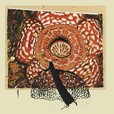
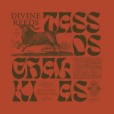
‘Experimental jazz, chanson, bluesy folk and various strains of outsider music permeate a rich layering of music boxes, walkie-talkies and plastic straws, plucked charrango and banjo, kazoos, flutes and snake-charming ocarina, accordion and melodica, found percussion and traditional tuned drums. The moods switch from child-like and epiphanic (Tarzan en Tasmanie, Madrigal for Lola) to babbling (Pocarina), mysterious and dark (Septième Ciel, Rugit Le Coeur) to tender and simple (Rainbow de Nuit, Chevalier Gambette); from murky, suspenseful melancholy (Levy Attend, Eno Ennio) to pensive psychedelia (Un Cercueil à Deux Places). A world of echoes. A tale of tales. You’ll be whistling and humming along on first listen.’
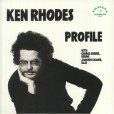
Tangily raw and fresh piano-trio jazz from 1974.
The title track and Triangle are ace, funky jazz-dance. The Journey is gnarlier funk. Robyn’s Lullaby and Nothing New are hazier, evocative, impressionistic.
Tiny pressing.
Arranged By Kieran Hebden.
The Beaters changed their name in tribute to the Rhodesian township which hosted their Damascene cultural and political awakening. One year after the LP entitled Harari came out in 1975, they were back in the studio, deepening the African sensibilities of their music, but also trying out influences like jazz, fusion and prog, which would carry them forward.
The third, 1980 LP of this vocal trio led by Trevor Bow. Recorded at Treasure Isle with expert backing by the Negus Dawtus, Family Man, Chinna, Rico…
Masterly Barry White production from 1974, the same year Brock handed Gloria Scott his killer song A Case Of Too Much Love Makin’. The title track is the business.
Plundered by Jay Z, Mos Def and Pete Rock.
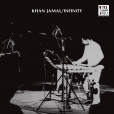
The vibes maestro leading a sextet including Sunny Murray and Byard Lancaster.
The jazz-dancer The Known Unknown was the boom tune back in the day, but this is excellent throughout, as unjustly neglected as the SteepleChase albums which came next.
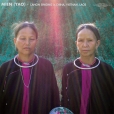
Rawly ethereal, other-worldly singing by members of hill tribes in China, Vietnam, and Laos.
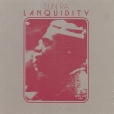
Recorded one long hot night in July 1978.
Sun Ra at the Rhodes, Disco Kid on guitar… Deadly funk, heady and grooving. A stone classic.
The new box set features the original LP alongside alternative mixes by Bob Blank first released in limited quantities for a 1978 Arkestra gig at Georgia Tech. Both versions of the album are cut loud at 45 rpm over 2LPs each.
Housed in a silver foil box, as per the original issues the first LP comes in a foiled sleeve while the second features two yellow A4 sheets pasted onto a white sleeve. With a twelve-page booklet featuring previously unseen photos and various texts.
The CD version is housed in a foil digipak.
The single LP is a straightforward reissue of the original LP.
The title track was ‘one of Sun Ra’s on-the-spot compositions,’ recalls Danny Ray Thompson. ‘Almost like an Ancient Egyptian Stargazing Ceremony, mapping out the stars and the planets.’ Where Pathways Meet is his ‘funky version of an Egyptian march. Pharaoh is sending his troops off to fight and this is his pep-talk! The music seems to take different pathways but still converges.’ The loping groove of That’s How I Feel features the reflective trumpet lines of Eddie Gale, with solos by John Gilmore, and Marshall Allen on ‘snake charming oboe’. The funky Twin Stars Of Thence weaves around Richard Williams celebrated elastic bassline; the haunting closer There Are Other Worlds is pure ‘space music’.