







Your basket is empty

Jakob Bro, Brian Blade, Craig Taborn, Chris Cheek, Jesper Zeuthen, Anders Christensen, Larry Grenadier & Marcus Gilmore, playing compositions by Paul Motian and Jakob Bro.
The album was recorded in a single session at New York’s Power Station with engineer James Farber, following a week-long residency at the Village Vanguard.
‘Danish guitarist and composer Jakob Bro is celebrated for his pure reflective expression and penchant for celestial textures, effortlessly distilling and refining quiet sonics. At the Village Vanguard, he leads an impressive group – featuring two bassists and two drummers – for a nearly week-long residency.
‘The perfectly poised, ambient-leaning soundworld that characterizes Bro’s compositions was discomposed and distended by this octet, probing thrilling sounds and providing ample opportunity to create spontaneously. It was an exhilarating jazz night with some of the most esteemed players out there.’ (Jazztrail.net)

‘Classic vinyl.’

Orange vinyl.

Our favourite of all his records.
From 1984, inspired by a Kenneth Patchen chapbook, it favours tenderness, lyricism and expressivity, but without foregoing Brötzmann’s characteristic squalling ferocity and angst. It never drags: he plays baritone, tenor and alto saxes, different clarinets including bass clarinet, and tarogato, bringing every trick and technique to bear on a whirl of feelings and emotions, in pieces nearly all less than five minutes. Bar the gorgeous opening reading of Lonely Woman, it’s all improvised, but utterly compelling, reflective, melodious, ravishing and rawly personal.
Beautiful music; hotly recommended.

The single LP via Rhino is in lovely mono.
The double LP is newly transferred from the master tapes, remastered, and cut at 45rpm, in an all-analogue process.
Presented in a gorgeous gatefold sleeve by Analogue Productions, as part of its Atlantic 75 audiophile series.
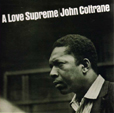
Mono vinyl.

‘Beautiful, haunting… spiritual reflection is sung with carnal force, songs of romance are rendered like hymns. For a few moments, on these ancient records, Baghdad sounds like paradise’ (Rolling Stone).

Twenty-one songs, running right back to 1971: assured, lovely, intelligent, good-humoured singer-songwriting, mixing up Americana, folk, pop, art rock, and gentle experimentalism.
Originally released in 2007 this redux edition includes new masters from a recently found pristine tape reel and was remastered by Timothy Stollenwerk at Stereophonic Mastering in Portland, OR. Revised artwork; extensive liner notes by Arthur’s partner Tom Lee.

Gonzalo Benitez and Luis Alberto Valencia were kingpins of the musica nacional movement in Ecuador. Check them out on the cover, on a rooftop in Quito’s Old Town, surveying their dominion.
In 1970, when Valencia collapsed onstage during a performance of the yaravi Desesperacion — ‘My heart is already in ashes’ — and died four days later, aged 52, his coffin was carried through those city streets on the shoulders of a throng of his fans.
They began singing as a duo in their mid-teens. During twenty-eight years together they recorded more than six hundred songs, for Discos Ecuador, Nacional, Granja, Ortiz, Rondador, Onix, Fuente, Real, Tropical, Fadisa, RCA Victor — and of course CAIFE.
Their exquisitely romantic harmonising is a sublime blend of collected forbearance and abject self-annihilation, underpinned and elaborated by the heart-piercing, improvisatory guitar-playing of Bolivar Ortiz. Effectively the third member of the group. ‘El Pollo’ sets the tone and intensity for everything that follows: listen to his soloing at the start of our opener, Lamparilla.
Musically a pasillo — a cross between a Viennese waltz and the indigenous yaravi rhythm — Lamparilla draws its verses from a poem by Luz Martinez from Riobamba, written in 1918 when she was 15, under the influence of Baudelaire and Mallarme. Another pasillo here, Sombras (‘Shadows’) is one of the best-loved songs in the musica nacional canon, setting poetry about undercover sex and lost love by the Mexican poet Maria Pren, which was considered pornographic on publication in 1911. ‘When oblivion comes / I will lose you to the shadows / To the hazy gloom / Where one warm afternoon I laid bare my unbridled feelings for you / Never again will I search out your eyes / Or kiss your mouth.’
And Benitez & Valencia looked back still further, to the indigenous roots of Ecuadorian music, as the key to its future. Carnaval de Guaranda is their take on a song dating back to the era of the Mitimaes, a broad group of Bolivian tribes conquered by the Incas and displaced to Ecuador. ‘Impossible love of mine / I love you for being impossible / Who loves what is impossible / Is the truest lover.’
Fiercely beautiful, desolate music from the shadowy mists of time, the lip of oblivion, for anyone who had a heart, for anyone who ever dreamed.