

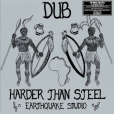
Your basket is empty

‘A moody, atmospheric delight. Jim’s roots in composition via tape-editing have evolved into a highly musical assembly of found-and-processed sounds that achieve near-orchestral majesty as they hang in the very air of the drama that unfolds in Kyle Armstrong’s Hands That Bind.
‘Described as a ‘slow-burn prairie gothic drama’, set in the farmland of Canada’s Alberta province, and starring Will Oldham and Bruce Dern, Hands That Bind is a spellbinding trip to the existential bone of rural working life in North America. As conflict rises over hard worked patches of land to provide a mere and mean existence, a desperate air settles in, as a series of mysterious, often supernatural occurrences rock the small community.
‘O’Rourke’s vaporous, serpentine musical backdrops and atmospheres reflect the obsessions and distractions of the film’s principles; moods of all sorts seen or otherwise implied. Additionally, the music highlights cinematographer Michael Robert McLaughlin’s closely observed accounting of the farmers’ environment, as well as the striking widescreen images of the big sky country with unnerving flair.’

‘As with many other ethnic groups of the area, a traditional singing pattern is used with each singer adapting words to context. Many of these songs express intimate, strong emotions that bring tears to the performers while they are singing. The cascading mournful feel of this music is beautifully transcendent. You’ve never heard anything like it.
‘Instruments used by the ensemble include the babi (single tree leaf ) and mepa (tree leaf rolled up into the shape of a horn or mirliton), a chiwo (three-stringed bowed instrument), a labi (six-holed bamboo flute), a lahe (three-stringed small lute) and a meba (vertical reed instrument).’
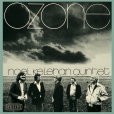
‘Stunning, moody, spiritual jazz from Ireland, recorded in 1979; featuring original compositions such as the deep collectors’ cut Spon Song, subtle Latin flavours on Spacer’s Delight, and a beautiful modal arrangement of the traditional Irish air Castle of Dromore.
‘A legendary recording in Ireland, Ozone reflects Kelehan’s keen appreciation of classic quintet-era Miles, with touches of the cerebral fusion of Ian Carr and the arranging genius of Neil Ardley. Not just a landmark Irish jazz set, Ozone is a lost classic of European jazz more widely.’
Licensed from producer John D’Ardis. Remastered at Abbey Road using the master-tapes; cut at D&M; pressed at Pallas. Presented with previously unseen photographs of the band, and their commentary.
A deadly trump card from Outernational. Essential, startling stuff. Bim bim bim.
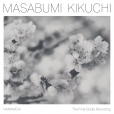
This is sublime. Check it out!
‘The most affecting solo piano album I’ve heard since Keith Jarrett’s much-loved The Melody At Night, With You more than 20 years ago’ (Richard Williams).
‘... the notes hang individually in the air as though being held up to the light… It’s so slow and patient, it becomes an observation of passing time’ (The Wire).

‘Naqvi’s electronics, Smith’s trumpet and Cyrille’s percussion acquiesce with finesse in a perfect simpatico balance of accommodating and complimentary interplay. The trio balance bursts of energy with delicate stillness to create a feeling of meditation. Nuanced, textural, subtle yet devastatingly affective as well as sensitive and contemplative where appropriate, they also deliver bursts of incredible energy and impact; navigating a path between expressions of dismay and meditative healing resolutions – both a protest and paean for harmony.’
‘Killer!’, says Gilles Peterson.
‘Exquisitely constructed… They are not landscapes to be admired at a distance, but inscapes to be explored with attentive care’ (The Wire).
‘Solace for the soul’ (All That Jazz).
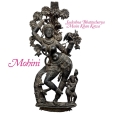
Three ravishingly soulful, wondrous ragas in the Hindustani Indian classical manner, superbly played on sarod and tabla.
Mohini is an enchantress, sometime slayer of demons.
‘Hans Hulbækmo and Egil Kalman have long been a playful and creative rhythm section, with one foot in free jazz and the other in folk music. They’ve played together in the Marthe Lea Band and other projects, and since last year they’ve delved into the folk music of Norway and Sweden — all set in an experimental duo format. Drums and jaw harp (Hans) meet modular synth and double bass (Egil).
‘Unit of Time draws from the rhythmic details of folk music, as the basis for minimalist compositions full of improvisation. It’s not all about the groove, though. Some melodies are interpreted straightforwardly enough, but the unconventional instruments give the music a new depth. Unusual timbres and sonic phenomena emerge, mesemerizingly.’
‘Though one long piece, New Old Medicine moves through several unofficial chapters. It originates in the psychic depths with a pensive melody. Gradually solidifying, the organ’s first solo ushers the piece into a swaying, reverent dance. This dance nears its end with a vigorously percussive section on oud, handing it off to the violin for a climactic solo. A momentary pause, then the rhythm thickens, and the musicians ride untethered through the midnight. This frenzy is followed by a calm repose on placid water. But this calm is merely a deep inhale before the final charged ascent into cosmic rapture.’
‘Classic Vinyl.’
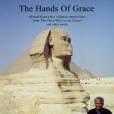
‘You’re never too old to learn something new. Reed credits bebop with keeping him and his friends out of reform school because they were too busy listening to records to get into trouble. Finding fame as a writer, he returned to music circuitously, eventually taking the plunge at aged 60 to study jazz piano. Diagnosed with prostate cancer in 2006 he hastily assembled a quintet to fulfil a lifelong ambition of recording an album. He made the record (and recovered). Cash-strapped during COVID, he became a composer to generate funds money for his plays, enlisting his daughter Tennessee as narrator.
‘These humble origins and a genuine love and natural talent for music are what underpins The Hands Of Grace. Consisting of works written for Reed’s play The Slave Who Loved Caviar alongside new original compositions, it brings in close friends and family to accompany his casual, unvarnished playing style that’s so genuinely heartfelt it feels as if you could be sat alongside in their living room. The music carries a lived-in simplicity yet it also holds something ambiguous that draws it away from the predictable. Music papers rustle, a living room chair is dragged up to the keys whilst Reed’s wife Carla contributes violin and daughter Tennessee recites her poetry on standout How High The Moon. This is a poignant family affair with no-one left out, ending on a touching tribute and voicemail from their late daughter Timothy.’