

Your basket is empty


The Handover
New Old Medicine
Sublime Frequencies
‘Though one long piece, New Old Medicine moves through several unofficial chapters. It originates in the psychic depths with a pensive melody. Gradually solidifying, the organ’s first solo ushers the piece into a swaying, reverent dance. This dance nears its end with a vigorously percussive section on oud, handing it off to the violin for a climactic solo. A momentary pause, then the rhythm thickens, and the musicians ride untethered through the midnight. This frenzy is followed by a calm repose on placid water. But this calm is merely a deep inhale before the final charged ascent into cosmic rapture.’
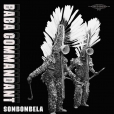
‘After the afro-beat fury of Juguya, this second album combines a potent mix of traditional roots and modern Burkinabe funk with a reverent revival of the iconic Mandingue guitar music of the 1970s.’
Searing Sahelian dance music, recorded in Ouagadougou, Burkina Faso, in February 2018.
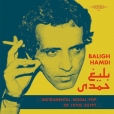
‘One of the most important Arabic composers of the twentieth century — writing for legends Umm Kalthum, Abdel Halim Hafez, Sabah, Warda, and many others — leading his own Diamond Orchestra, with Omar Khorshid on guitar, Magdi al-Husseini on organ, Samir Sourour on saxophone, and Faruq Salama on accordion. During this decade, Hamdi fully realized an international, hybrid music which incorporated beat-driven Eastern-tinged jazz, theremin-draped orchestral noir, Khorshid’s searing guitar solos, and a buzzing, sitar-based, Indo-Arabic psychedelic exotica… some of the hippest music of the era, anywhere.’
‘Egypt’s ‘official’ popular music throughout much of the twentieth century was a complex form of art song steeped in tradition, well-loved by the middle and upper classes. The music business was highly structured and professional; centred in Cairo. However, far from the metropolis, to the north and northwest, in towns like Tanta and Alexandria and extending across the Saharan Desert to the Libyan border, a raw, hybrid shaabi/al-musiqa al-shabiya style of music was springing up, supported by small, upstart labels.
‘This compilation covers the full range of styles presented by the short-lived but fecund Bourini Records, launched in the late 1960s in Benghazi, Libya. Gobsmacking moments include Basis Rahouma’s transformation into a growling, barking man-lion, and Reem Kamal’s onwards-and-upwards hand-clapping party banger, with a grooving nihilistic dissonance reminiscent of the Velvet Underground. The thorough-going contrast with mainstream Egyptian popular music is stark in Ana Mish Hafwatak, its vocal woven deftly through a constant accordion drone, and the sparse, slow-burning lament Al Bint al Libya. Whereas the mainstream was aspirational, projecting Egyptian culture at its most refined, the performances captured by Bourini were authentic expressions of ordinary, everyday life. More than half a century old, this music has lost none of its urgency, presence, or relevance.’

Shot between 2007 and 2012, Hisham Mayet’s film is an exhilarating, hallucinatory, harrowing record of music, ritual, life, and landscape along the Niger River, as it winds through Mali and the Republic of Niger.
Fantastic. Raw, blazing street music from Marrakesh. Electrified banjos and mandolins, drums, singing; amps run off moped batteries; the definitive interpretation of the Dana International hit Sabra And Shatilla.
Infectious songs and rootical instrumentals — the fifth SF album presenting Laurent ‘Kink Gong’ Jeanneau’s amazing documentation of the vanishing indigenous music of the rural Asian frontiers.
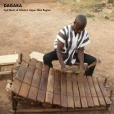
‘Saharan trance stun guitar… a hypnotic choogle that rivals both the Magic Band’s early 70s marathon workouts and the Velvet Underground’s drone on tracks like Sister Ray.’

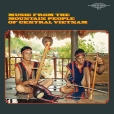
‘As with many other ethnic groups of the area, a traditional singing pattern is used with each singer adapting words to context. Many of these songs express intimate, strong emotions that bring tears to the performers while they are singing. The cascading mournful feel of this music is beautifully transcendent. You’ve never heard anything like it.
‘Instruments used by the ensemble include the babi (single tree leaf ) and mepa (tree leaf rolled up into the shape of a horn or mirliton), a chiwo (three-stringed bowed instrument), a labi (six-holed bamboo flute), a lahe (three-stringed small lute) and a meba (vertical reed instrument).’
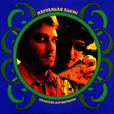
New recordings invoking the grand traditions of Turkish psych with passionate recastings of tripped-out surf, Cambodian rock, Saharan guitar, electric Thai; even a little Sun City Girls post-punk.
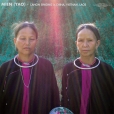
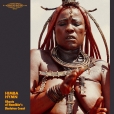
Rawly ethereal, other-worldly singing by members of hill tribes in China, Vietnam, and Laos.
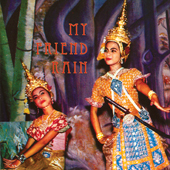
‘Dreamy musical segments, fleeting glimpses, odd sounds, temple shrines, decay, death, afternoon rains, and mysterious celebrations… from the Irrawaddy delta to humid nights on the streets of Isan province.’

Charged, gritty, soulful pop yeh yeh from 1968-71, with backing by Malaysian legends like The Rhythm Boys, The Wanderers, The Flamingoes and The Falcons.
With a full-size, eight-page, colour booklet containing detailed biographical notes and Othman’s own rare photos.
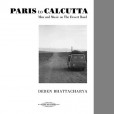
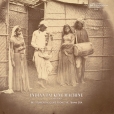
‘Deben Bhattacharya (1921–2001) was a highly influential field recordist, poet, filmmaker, musicologist and amateur ethnomusicologist, based in Calcutta and Paris. He produced a vast number of LPs, CDs, videos and radio shows of traditional music from India, Asia, Africa, the Middle East, and Europe.
‘Never before published, Paris To Calcutta features over four hours of music and is Deben’s impressionistic account of a 1955 journey overland, in a converted milk delivery van, from France to India, collecting and exploring music along the Desert Road.
‘With four CDs of recordings, photographs, Deben’s original recording notes, musical transcriptions and more. An amazing glimpse into a time long gone and essential listening for anyone interested in folk and world music traditions.’
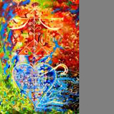
Vivid, unflinching film of two annual Haitian Vodou pilgrimages — for Ezili Danto, goddess of love, art and passion, and her old man Ogoun, god of war, iron, healing. Ecstatic, bloody, intensely musical.

Aka baile funk.
Dangdut, keroncong, jaipongan, rock, pop, disco, as well as theatre, commercials, DJs, news snippets, and other broadcast bits and pieces.
Assorted strange and beautiful pop, folk, and classical music styles — intercut with bits of broadcast staples like synth ballads, hip-hop jingles, and internationally popular songs re-recorded in Burmese.
We ship worldwide. The postage rates for your order are displayed before payment, which is processed using Paypal. You can pay using your Paypal account or any of the following cards. No need to join Paypal.
