






Your basket is empty


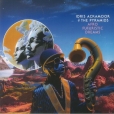
The first definitive reissue of this 1977 session recorded at the Bluebird in Bloomington, Indiana; restoring previously excised material, a true running order, and the natural transitions between pieces.
‘The Arkestra were at the peak of their powers in 1977, releasing revered albums like The Soul Vibration Of Man and My Favorite Things, with Arkestra regulars Marshall Allen, Danny Ray Thompson, Michael Ray and Luqman Ali among the core musicians. Ra also continued his touring in Europe with historic gigs in Italy. During this period, Arkestra live performances were often loosely structured into thematic blocks that moved from reflections on jazz history to cosmic ‘space narrative’ sections featuring collective chants, extended Africa/Egypt-inspired grooves and selections from the Great American Songbook. This recording brings in all of these features with re-imagined versions of standards like Take The A Train, St. Louis Blues, and title track Over The Rainbow, alongside rarely recorded Ra compositions like Make Another Mistake and Amen Meni Many Amens. Ra conducted improvisations to guide the listener seamlessly from one musical scene to the next. As he described it: ‘It’s like a party—we enjoy ourselves and everybody’s invited to enjoy it with us.’
Newly remastered using the original source tapes; extensive new liner notes by Chris Cutler
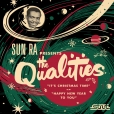
Likely recorded in Chicago around 1956; originally released on Saturn. Ra is co-composer of both sides; it could be him playing the harmonium.
‘I had two main vocal groups at the time,’ Ra once recalled. ‘One was called the Cosmic Echoes. And the Cosmic Rays, too. It was around the same time that John Gilmore joined the band. I saw the possibility that they could be really great so I began to coach them; they were connected with a barber shop, but I taught them other things.’ ‘We’d go down to the barber shops and rehearse some groups,’ added John Gilmore. ‘Sun Ra had them singin’ some beautiful stuff. I think he probably was saving them from themselves. He heard them, heard their potential, snatched them off the street, and started making them do something constructive.’
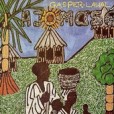
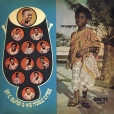
‘The groundbreaking debut album by legendary Nigerian percussionist Gasper Lawal, originally released in 1980 on his own label CAP.
‘Lawal meticulously self-produced, composed, and overdubbed the album over four years, assembling an elite group of musicians from both Nigeria and the UK. Several of he instruments used were hand-built, including a powerful one-of-a-kind drum carved deep in the Nigerian bush. “This music is not about trends, about what is commercial or a “sound” of a particular moment,” explains Lawal, “it is about music to be felt, that gives pleasure. It is nurturing and meditative.”
‘Spiritually resonant, rhythmically rich and genre-defying,’
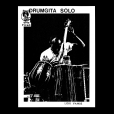
A reissue of Vambe’s privately pressed album from 1982.
‘Occasionally, you find music outside the commercial mainstream, outside of everything – the music of visionaries, eccentrics, inventors, loners. Moondog, Daphne Oram, Harry Partch are from this mould. And so too is Lori Vambe.
‘A self-taught drummer, inventor, and sonic experimentalist, who moved from Harare to London in 1959, Vambe is a unique figure in British music. The creator of his own instrument, the drumgita (pronounced ‘drum-guitar’) or string-drum, Vambe intended to create a kind of music that had never been made in order to pursue access to the fourth dimension. The album plays with time, mixing hypnotic, trance-like drumgita pieces with the same segments played backwards. You can hear echoes of African drumming traditions, minimalist repetition, and tape-manipulated musique concrète— but ultimately, the album defies genre. It is a solitary voyage, spiritual and futuristic.’

‘Deep and haunting; a dense tapestry of layered percussion, time-warped tape loops, and spiralling drumgita figures, all underpinned by hypnotic improvisations from Brazilian pianist Rafael Dos Santos. Privately pressed in 1982, it is both ecstatic and unsettling, a landmark recording in black British experimental music.’
Sensational price for easily the most outstanding release on RSD 2025, imperiously superseding Shandar’s selection of edits.
The Arkestra at its magnificent peak, in its very first performances outside North America (complete with dancers, light-shows, and psychedelic projections of New York and Chicago, moon rockets, Egyptian Gods and plumed African warriors).
‘Plenty of fiery avant-garde action,’ notes Daniel Spicer in The Quietus. ‘Much of this emanates from Ra’s solo interludes. On piano, he remains a suis generis genius of spontaneous creation, drifting from wistful melodic daydreams to sudden irruptions of violent intensity and back again.
‘Around this time, at the turn of the 1970s, he had also begun his tumultuous explorations of the recently purchased Moog synthesizer. Here, Ra approaches the synth not as an electric guitar substitute, as contemporaries such as The Mahavishnu Orchestra’s Jan Hammer were then doing, but as a furious generator of alien sounds and timbres as though beamed in from some far galactic outpost. There are also group improvisations of boiling energy – often conducted by Ra using a lexicon of theatrical gestures – which forge ahead into the most coruscating free jazz, with saxophonists John Gilmore and Marshall Allen straining at the horn’s limits.
‘And yet, for all that, the shows were approachable, enjoyable and, above all, fun. Across the four hours of music, a wide range of moods are touched upon. There are the many anthemic songs and chants – such as Satellites Are Spinning and We Travel The Spaceways – delivered in vocalist June Tyson’s sweet, down-home tones with enthusiastically ragged call-and-response choruses by the rest of the Arkestra spelling out Ra’s sci-fi philosophy. There are wafting space-ballads; muscular, big band hard-bop workouts; and percussion-heavy rainforest modal jams. Each of the two evening programmes feels like a meandering yet comprehensive journey into the deepest recesses of Ra’s imagination, calling in on all his obsessions and preoccupations.’

From the same 1979 recording sessions as Strange Celestial Road, this is one of Sun Ra’s best-loved, funkiest records, with John Gilmore in full flight, and a bigger Arkestra than had just played the Moers festival.
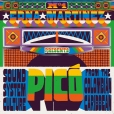
A compilation inspired by the fabulous sound-system, record-collecting culture of the northern cities of Cartagena and Barranquilla, where ricocheting champeta, highlife, soukous, mbaqanga, zouk, soca, and cumbia blare through stacks of hand-painted speakers, in street-corner, neighbourhood bailes.

From 1979, and including UFO — rumbustious disco, Arkestra-style, featuring Marshall Allen on oboe, with solos from John Gilmore, Taylor Richardson and Michael Ray (who also mixed the album, layering in pre-recorded material).
Seductive Fantasy lines up John Gilmore, James Jacson’s bassoon, some fine baritone saxophone and some electric guitar and bass, Marshall Allen’s oboe and Eloe Omoe’s bass clarinet, with great piano-playing from Ra throughout, and towards the end some arco strings.
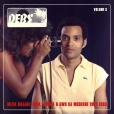
‘Diving deeper into the archives of one of the greatest French Caribbean labels, Disques Debs, based in Guadeloupe. Founded by the visionary Henri Debs in the late ‘50s, the label and studio operated for over 50 years, releasing more than 300 7” singles and 200 LPs, making it a cornerstone of Caribbean music history. The label bridged traditional genres like biguine and gwoka with contemporary styles like cadence, compas, and zouk. Volume 3 in this series spotlights one of the label’s most dynamic and influential periods as it expanded its global reach during the 1980s, highlighting both emerging talents and established artists who defined the era.’

Recorded a year after the debut, continuing the earthy flow of Malombo’s music. The two albums have since been recognised as unique landmarks of South African jazz. Alongside full original artwork, both albums feature a new interview with Julian Bahula.
We ship worldwide. The postage rates for your order are displayed before payment, which is processed using Paypal. You can pay using your Paypal account or any of the following cards. No need to join Paypal.
