

Your basket is empty

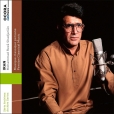
Searingly soulful, soaring performances by this bonafide master of Persion classical singing, including settings of the ravishingly sensual, tormented ghazals of Hafez, from the fourteenth century.
With accompaniment and interludes by an ensemble comprising santur, daf, tombak, rubab, kamantche, tar, setar, and flute.
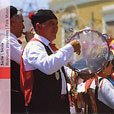
Work songs, music and songs about everyday life, or the calendar, or perhaps to run alongside ritual feasts, with guitar, mandolin, accordion, guimbarde, tambourine, bagpipe and reed flute.
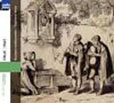
1950s recordings, mostly vocal, with wide range and variety — Alpine choral polyphony, poetic improvisation from Central Italy, funeral laments from the South, Sicilian songs to cure tarantula bites…
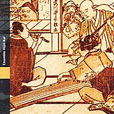
Subtle, calm classical trio music — for shakuhachi flute, koto zither and shamisen lute — influenced by Buddhism.
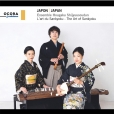
Exquisite music for shamisen lute, koto zither, and shakuhachi flute, running back more than a hundred years, to the end of the Edo era. Expertly performed by this accomplished trio of graduates of the Tokyo National Conservatory.
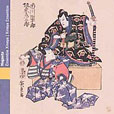
Musical accompaniments to kabuki theatre, by this pre-eminent Japanese chamber orchestra, with voice, shamisen lutes, fue flute, and kotsuzumi, otsuzumi and taiko drums.
With accompaniment on the sanshin lute — a lovely, melodic blend of Japanese, Chinese and South East Asian styles characteristic of the Okinawa archipelago (formerly the independent kingdom of Ryukyu).
The medieval story of the Heike clan — combining drama and heroics with Buddhist reflection on the ephemerality of existence — sung by Kakujo Iwasa and Kakuryu Saito, with lute accompaniment.
Six deeply spiritual pieces from the Kinko School, developed in eighteenth century Japan by wandering zen monks for whom this flute music was a pathway to enlightenment.
Sublimely refined songs about broken hearts, dazzling landscapes and lost kingdoms, with zither and flute accompaniment.
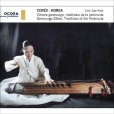
‘The geomungo is a six-string zither with sixteen frets. The resonating board is made of paulownia wood. Its origins trace back to the ancient kingdom of Goguryeo (37 BCE to 668 CE), which dominated the territory of present-day North Korea and a large part of Manchuria.
‘The geomungo makes dramatic sounds, through the friction created by the plectrum striking the strings, or the rustling created by subtle movements of the left hand over the strings.
‘Here Lee Jae-hwa performs the suites Geomungo Hoesang and Geomungo Sanjo, in the respective styles of the south and north of the Korean peninsula: distinct forms, techniques and rhythms, with a shared subtlety, sensitivity and emotional power.’
A rare Saravane-style lam, beautifully sung by Nang Soubane Vongath, and with rocking, virtuoso mouth-organ, with sixteen or so reed pipes, a metre-or-more long.
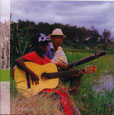
Various songs — and valiha zither, made from a bamboo trunk, the sodina flute, the angorodao accordion, the kabosy lute, and the amponga tany, a ground zither made of plant rope, wood, and shit.
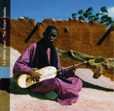
Deep, rough, hypnotic recordings of the Fulani lute (and singing), made by this inspirational French label around Douentza and Bamako, Mali, between 2002-2004.
Bele is an African folk drumming and singing tradition running back to slavery days. Mondesir leads five singers, with two percussionists, on tambour and tibwa.