

Your basket is empty

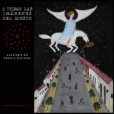
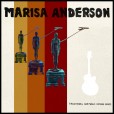
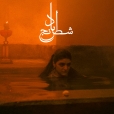
‘The sacred music of peasants in Chile’s remote Central Valley: a communal form of worship and reflection, played in packed rooms throughout the night when work is done. The Canto has persisted for centuries in the voices of hundreds of men and women who conjure vivid visions of apocalypse, the divine, and angelitos (very young children who have died). But the verses are also rooted in the daily life in the valley — labour and drought, family, animals, and the life cycles of plants. To hypnotic accompaniment by guitar and the celestial, 25-string guitarron, countless entonaciones or melodies range across the 10-line rhyming decimas, in an ancient song form originating in Spain and found from South America to the Mississippi Delta. The combination is entrancing and transporting, cosmic and earthly at once.
‘The handsome gatefold jacket presents the visionary, apocalyptic art of Frederico Lohse, a baker from the village of Los Vilos, who painted on old flour sacks; with an eight-page booklet containing lyrics, photos, and extensive notes about the Canto tradition.’
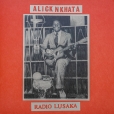
A beguiling, one-of-a-kind blend of country, township jazz, and pop, from the heart of Zambia’s freedom movement, by ‘the first African voice on the radio for many Central Africans and the first kind of pop star for many Central Africans.’
Vocalist, guitarist, and bandleader Alick Nkhata moved effortlessly between lonesome country slide, big band pop, and air-tight vocal harmonies, all with roots in Bemba and other African traditional songs and rhythms. It’s a dizzying, inclusive, expansive blend from an artist and music archivist who became the voice of his nation’s fight for freedom. The lyrics and music represent the times — lonesome country laments like Nafwaya Fwaya and Fosta Kayi drift along the railways to urban centers and copper mines. Nalikwebele Sonka (I Told You Sonka) pairs honey-soaked yodels with a warning about the downward spiral of unemployment in townships, while Mayo Na Bwalya (Mother of Bwalya) is a mother’s plea to a traditional songbird for guidance of her wayward son. Songs like Shalapo, Kalindawalo Na Mfumwa, and his biggest hit, Imbote, infuse piano, big band horns, and even early electronic instruments into stunning syncretic pop masterpieces.’
‘It’s great that Zamrock is so well known for its incredible story and music, but that intense focus has a way of flattening the diversity of Zambian music and its history. So maybe we can’t necessarily say that Alick Nkhata led to Zamrock, but that rich history of mixing influences and creating new sounds in the copper belt started with Alick in lots of ways. All of that stuff is what people appreciate about Zamrock — that it was mixing sounds and that it was political in its own way. There’s a long history of that approach in the region, and it starts with Alick.’
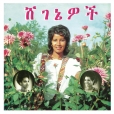
‘Dizzying close harmonies and indestructible grooves on this lost classic from Ethiopia’s Golden Age.
‘Raised in the bustling cosmopolitan milieu of late-empire Addis Ababa, two young women released one single and a full-length LP in 1976, before disappearing from the music business entirely. Originally released on Kaifa, the label responsible for some of the heaviest and funkiest Ethiopian records of all time, Beauties was a hit, selling out in a few days. But it came out at the beginning of two decades of darkness and oppression in Ethiopia, and this is the first full reissue of this overlooked classic.
‘Beauties is at once totally unique and an amalgamation of all that came before it during Ethiopia’s explosive two decades of creativity in the 60s and 70s. Fans of Ethio-jazz will hear Mulatu in the dark, minor-key piano runs, turning in on themselves on songs like Amlak Abet Abet and Metche Neow. Interlocking percussion and rock steady basslines are a signature of the Army Band, which also backed greats like Tlahoun Gesesse and Mahmoud Ahmed. Arranger Teshome Sisay is also an incredible flutist, playing with both sensitivity and swagger on tracks like the majestic Ayinouma.
‘But the vocals are the most stunning part. Aselefech and Getenesh met at the legendary Hager Fikir Theatre in Addis, where centuries-old Ethiopian culture combined with the modern music of the capital’s elite. Trained in traditional music, their dual vocals lead in extremely close harmony, intertwined and infinitely creative in their phrasing.
‘By the time this record was released, the Derg Regime was imposing strict crackdowns on music and artistic expression. Targeted as allies of the deposed Emperor Haille Selassie, the artists (and most musicians) had to keep a low profile. This is one of the last great releases of the Ethiopian Golden Era.’
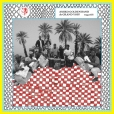
The word from Mississippi…
‘Relentless polyrhythms, call and response vocal poetry, melodic and layered horns, flute, and even accordion!!! A huge and rich sonic landscape, propulsive, energetic, and deeply soulful.
‘Every neighborhood in Dakar has its own Assiko band. They’re community groups, open to anyone who wants to join, as opposed to the legendary griot culture that only allows select families to take part.
‘These hyper-democratic bands can kick off a thousand-person street party at any moment. But they also operate as mutual aid groups, neighborhood security, impromptu after-school programs, and repositories of local music and lore.
The Assiko Band of Grand Yoff neighborhood is led by Djiby Ly (Wau Wau Collectif), who takes his role in the community seriously. He’s led iterations of the band for over a decade, and describes in detail each rhythm they play, its roots, travels, and contours. This Assiko band is particularly prolific and popular, and these recordings remind me of a good rock band - loose and rangy, you can hear the humor and warmth amongst the bandmates come through.’
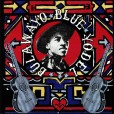
‘Lovely country & western-inspired music from 1950s Zimbabwe, South Africa and Kenya. Fingerpicking ‘omasiganda’ troubadours, train-car yodels, raw slide guitar and haunting travel-weary ballads, from rare 78s all reissued here for the first time. A heavy duty document of a nearly lost scene, and all the songs are stunners to boot. George Sibanda, Josaya Hadebe, Sabelo Mathe, Petrus Mntambo… In old-school tip-on covers, with a 12” booklet of deep research and full lyrics. Co-released with Olvido.’
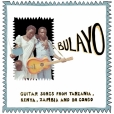
Beautifully relaxed, intimate recordings of fingerstyle guitar masterpieces by stars like Jean-Bosco Mwenda, Losta Abelo, and Emmanuel Mulemena, and brilliant but previously under-recorded artists like Tanzania’s Francis Kitime and Kenya’s Mtonga Wanganangu. From 1979-80, the sessions were set up in homes, village squares, and watering holes; you can hear laughter, children playing, and glasses clinking.
Lovely stuff.
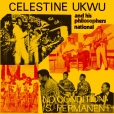
A compilation of the deepest and most affecting songs by The Philosophers National from Nigeria, beginning in the 1970s. Lilting, multi-layered, pulsing music, with muted trumpet solos, mesmerising guitar runs, driving percussion, and concise and clear-eyed lyrics sung so beautifully by Celestine Ukwu.
‘Celestine ditched the jaunty dance rhythms and relatively facile lyrics typical of the reigning highlife tunes, and ignoring the soul music tropes most of the highlife bandleaders were appropriating in an effort to inject new life to their ailing format. Instead Celestine concocted a new highlife style that was more contemplative and lumbering; with the layering of Afro-Cuban ostinato basslines and repetitive rhythm patterns that interlocked to create an effect that was hypnotic, virtually transcendental. Meanwhile, Celestine himself sang as he stood coolly onstage in a black turtleneck and a sportscoat, looking like a university professor. The message was clear: this was not necessarily music for dancing—even though the rhythms were compelling enough. This was music for the thinkers’ (Uchenna Ikonne).
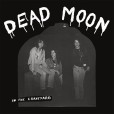
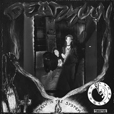
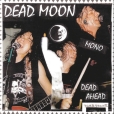
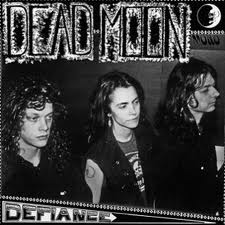
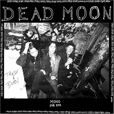
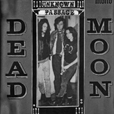
Dead Moon’s first record, originally released in 1988.
‘An authentic mix of psychedelic rock, punk, blues, country & every other American music worth a damn,’ writes Mississippi, questionably. ‘This LP features all-time classics such as Graveyard (a 13th Floor Elevators type vibrating psychedelic song), Don’t Burn The Fires & I Hate The Blues. Lo-fi as hell.’
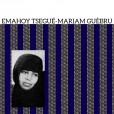
‘Gebru is a true original,’ says Mississippi. ‘Her playing is somewhere between Satie, Debussy, the liturgical music of the Coptic Ethiopian Church, and Ethiopian traditional music. It is some of the most moving piano music you will ever hear! All original compositions available for the first time on vinyl beyond the original early 1960s editions, which are completely impossible to find. Old school tip-on cover with gold foil printing. A must-have masterpiece for anyone who needs some spiritual comfort.’
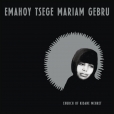
Her 1972 private-press LP, plus two unreleased piano recordings, mapping out a deeply personal take on Ethiopian Church Music.
Here is Emahoy’s most directly sacred and spiritual music-making — and some of her most moving — self-recorded in churches across Jerusalem, on piano, harmonium, and pipe organ.
With extensive biographical notes by Thomas Feng. Beautifully remastered. Old school tip-on jacket with silver-foil stamping. Black or clear vinyl.
We ship worldwide. The postage rates for your order are displayed before payment, which is processed using Paypal. You can pay using your Paypal account or any of the following cards. No need to join Paypal.
