



Honest Jons logo

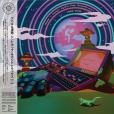
Blissed-out, refined electronica, with synths, piano, and guitar, from 1976.
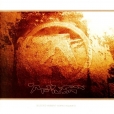
The numbered, 50th Anniversary edition of the LP.

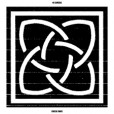
Microtonal folk music mixed with electronics and noise.
The first record was rave-reviewed.  ‘I was transported to secluded valleys where age old traditions are the passionate expressions of a community, here re-energized by the chillingly sensitive electronic wizardry of Anders Hana and Morten Joh’ (Songlines). At home in Norway even the tabloids picked it up: ‘Gorrlaus has the same intense and monotonously suggestive sound hunt as early Kraftwerk, at the time they played Ruckzuck’ (VG).
And now II is a next step further in the same direction, more deeply attuned to diverse materials derived from field recordings and other research, with finer nuance and detail… and more fiddle.

‘What does it mean to listen? I mean, really to listen to the infinite possibilities of every moment of our sonic lives? No composer in 20th and 21st century music asked the question more sensitively, or more profoundly than Eliane Radigue, who has died at the age of 94.
‘Radigue was a sonic pioneer. Pre 2001, her music was made exclusively for synthesisers, because the technology allowed her to get inside the world of sound, stretching individual pitches into seeming infinities of slowness and concentration, in a way that traditional composition didn’t. Listen to the epic scales of ever-changing changelessness — a paradox that makes sense when you encounter her music — of her Trilogie de la Mort to experience what I mean. As Pascal Wyse wrote in his interview with her, Radigue’s use of synthesisers meant that ‘the music didn’t contain sound: the sound contained the music’ (The Guardian).

‘To start with, disorientating; something you can’t quite grasp. Further listening discerns a futuristic, unsteady metropolis. At times, the music is soft and expansive; at others, sharp and distorted. Folk and pop sensibilities emerge, suspensively. Voices thread in melodic, indistinct, sirenic messages, guiding us through.’

‘Based in the south of France, Beduneau builds intricate self-playing installations and DIY electronics. Bringing a fresh and personal perspective to electronic and electroacoustic music, his work is intent on opening up dialogues about the social construction of disability, and other norms and conventions.
‘‘Clairon’ refers both to a medieval trumpet and to the beloved with whom this music was first shared, as a kind of impressionistic, though deeply moving sound-diary, during the stillness of the pandemic. The movement of air, pressure, resonance, and the physical properties of the trumpet are reimagined; organic ASMR tones, synthesized bird calls, and pirouetting melodies of pipes and bells score an imaginary biodome where chaos and harmony coexist.
‘Striking, singular, and boundary-pushing.’

‘Eleven pieces recorded over the past year, moving between the small town of Alfred in upstate New York, and Beirut; stepping out, as if onto ice, into a new life on a new continent during a time of tragedy, turmoil, and upheaval.
‘Unfamiliar instruments, new materials and new sounds delicately build on Yara’s intimate style, with its backbone of homemade mechanical music boxes and personal archive of family recordings. She explores the peculiar resonance of the metallophone, and delves into her collection of deconstructed toy pianos, guiding her music into ever more surreal territories… dreamlike, fragile, fragmentary, and strangely timeless.’

‘The opener is a statement of intent — frazzled, shuffling drums, ketamine oud, heavy sub bass — something like Wordsound’s Scarab zooming out of the 90s into the future. Tombaroli is a head nodder, with insistent percussion and banging pulse. A lysergic fever-dream, Bullet Holes dips into spooked psychedelia; No Minus sounds like a distant cousin of DJ Premier’s production Come Clean, for Jeru.
‘Channel 83 lands us back in the club for a rib-rattling stomp, weaving mystical soundsystem magic with its stunted horns and swirling voices. The grimy judder of Expect Excerpt slides proceedings down to a bleary-eyed half-speed, like a party which won’t let you leave. Mount Point is a welcome release, an early morning sunrise — rich, slow, and shimmering — before Landings Dub signals the end of the journey with a metallic elegy; both a summing up of the record, and the contemplation of your flipping it, and re-entering the world of Detraex Corp.’

‘Eight tracks of jagged electronics, heavy basslines, and fractured spoken word collide in a body-jerking soundclash that is both raw and vital.’

Good On Paper enjoyed ‘Baldauf’s crisp, distanced tones accompanied by Roe’s ominous, pulsating programmed bass line and four-to-the-floor whack, coaxing pure pop out of tension and incongruity.’ Electronic Sound Magazine hailed the LP as ‘a blistering, club-forward workout’, with ‘top-drawer, nose-bloodying electronics,’ positioning the Stroud duo as ‘rather like a wonky Tom Tom Club with added grit.’

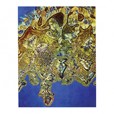
Scintillating, alchemical kosmische; visionary, deep, and luminous; and beautifully sleeved, with gold foiling and silver ink.

Works In Metal fans out a set of acid treatments and finely sharpened blades — cutting, shaping, suspending form. Sounds are melted down and forged as if liquid metal.
The works are paired. Arc’s Blue Flame previews the smoking volatility at the album’s core. Echoes and resonance soften the dissonant, bright textures; all overlaid with Fofana’s signature, percussive kick drums. Welding drills into the discordant thrills and spills of metamorphosis. Sparks fly and the bittersweet arc of change unfolds.
Fofana discreetly folds in text, poetry, and field recordings, spooring their decomposition and recomposition with a prismatic point of view. The coupling Obscure Light (Decomposition) and Obscure Light (Recomposition) marks something new in his music. The pulse is brightly honed, cascading beyond the dancefloor, exultingly eluding musical genre.
Works in Metal is perhaps Fofana’s most narrative album. At its heart is the killer, extended Lure of the Fragment / So Another Sound Suggests Itself. Melodies circle in call-and-response patterns, balancing proximity and distance, signalling the inward gravity required to work with metal. A nested story-line, with birds flying in; an album within an album. Dredging up memories and associations, Fofana filters in selections from his sound-archives. Layered with synths, field recordings become instruments in their own right. The last three minutes proffer precious clarity — a memory, in miniature, flashed onto molten metal.

In 1943 Suzanne Césaire declared that ‘our surrealism will then supply them the leaven from their very depths. It will be time finally to transcend the sordid contemporary antinomies: Whites-Blacks, Europeans-Africans, civilized-savage: the powerful magic of the mahoulis will be recovered, drawn from the very wellsprings of life. Colonial idiocies will be purified by the welding arc’s blue flame. The mettle of our metal, our cutting edge of steel, our unique communions — all will be recovered’. Works in Metal is a tribute to her prophecy; its enactment, sculpted in sound.