

Your basket is empty

An overview, 1958-2017: thirty-three works, including landmarks like Le Voyage, Messe Pour le Temps Présent, Variations Pour Une Porte Et Un Soupir, Messe De Liverpool, Apocalypse De Jean and Dracula; also including fourteen never before released, like La Note Seule, and Grand Tremblement, composed in 2017, the year of his death.
Discs in digi-sleeves, inside a box with a lift-off lid. 100-page booklet.
1970s bottlings of the ‘crystal giggling energy’ of muse Vista, through a pioneering mix of one-stop synths, tape reversal, feedback and so on. Supposedly the kind of thing you hear during a near-death experience.
‘Based in the south of France, Beduneau builds intricate self-playing installations and DIY electronics. Bringing a fresh and personal perspective to electronic and electroacoustic music, his work is intent on opening up dialogues about the social construction of disability, and other norms and conventions.
‘‘Clairon’ refers both to a medieval trumpet and to the beloved with whom this music was first shared, as a kind of impressionistic, though deeply moving sound-diary, during the stillness of the pandemic. The movement of air, pressure, resonance, and the physical properties of the trumpet are reimagined; organic ASMR tones, synthesized bird calls, and pirouetting melodies of pipes and bells score an imaginary biodome where chaos and harmony coexist.
‘Striking, singular, and boundary-pushing.’
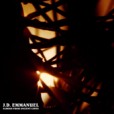
Ravishing jazz and electronics from the same stumbling, giddy reaches as La Monte Young and Terry Riley, recorded in Texas in 1981 on multi-tracked organ and synths (with tape loops of birds and wind-chimes), and acoustic guitar.
‘My music is designed to enhance deep meditative, or altered states, to allow the listener to personally connect to the Creator of All that exists in the Universe. My music style is to first create a foundation using cyclic, polyrhythmic music, then build several layers of improvised leads and rhythms that allows you to transcend time and space… We have Memories of Past Lives that reverberate in our hearts like Echoes From Ancient Caves.’
‘To start with, disorientating; something you can’t quite grasp. Further listening discerns a futuristic, unsteady metropolis. At times, the music is soft and expansive; at others, sharp and distorted. Folk and pop sensibilities emerge, suspensively. Voices thread in melodic, indistinct, sirenic messages, guiding us through.’
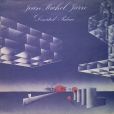
Recorded by Jean Michel Jarre in 1972, during his work experience at G.R.M. (Groupe de Recherches Musicales), for a commission to provide sound for public spaces like airports and libraries. Fifteen tracks made with only two synthesizers (EMS VCS3 & Farfisa organ) in an experimental and very minimal style.
‘It was a crazy album, totally homemade, with rhythms that I made in my student room, with a minimum of equipment and at the same time electronic sounds that I stole from the GRM where I went at night after stealing the keys to the studios. It is a pirate record, in every sense of the word, in which we find what I did afterwards.’
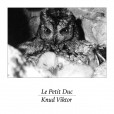
Recordings of an owls nest throughout a nesting season in the spring and summer of 1978, with Viktor himself telling the story of an owl family. Originally planned to fit on a 7” record, but never released till now. The booklet includes Danish and English translations of the original French narration, illustrated with a series of Viktor’s own photographs of the owls.

Scintillating, alchemical kosmische; visionary, deep, and luminous; and beautifully sleeved, with gold foiling and silver ink.
Works In Metal fans out a set of acid treatments and finely sharpened blades — cutting, shaping, suspending form. Sounds are melted down and forged as if liquid metal.
The works are paired. Arc’s Blue Flame previews the smoking volatility at the album’s core. Echoes and resonance soften the dissonant, bright textures; all overlaid with Fofana’s signature, percussive kick drums. Welding drills into the discordant thrills and spills of metamorphosis. Sparks fly and the bittersweet arc of change unfolds.
Fofana discreetly folds in text, poetry, and field recordings, spooring their decomposition and recomposition with a prismatic point of view. The coupling Obscure Light (Decomposition) and Obscure Light (Recomposition) marks something new in his music. The pulse is brightly honed, cascading beyond the dancefloor, exultingly eluding musical genre.
Works in Metal is perhaps Fofana’s most narrative album. At its heart is the killer, extended Lure of the Fragment / So Another Sound Suggests Itself. Melodies circle in call-and-response patterns, balancing proximity and distance, signalling the inward gravity required to work with metal. A nested story-line, with birds flying in; an album within an album. Dredging up memories and associations, Fofana filters in selections from his sound-archives. Layered with synths, field recordings become instruments in their own right. The last three minutes proffer precious clarity — a memory, in miniature, flashed onto molten metal.
In 1943 Suzanne Césaire declared that ‘our surrealism will then supply them the leaven from their very depths. It will be time finally to transcend the sordid contemporary antinomies: Whites-Blacks, Europeans-Africans, civilized-savage: the powerful magic of the mahoulis will be recovered, drawn from the very wellsprings of life. Colonial idiocies will be purified by the welding arc’s blue flame. The mettle of our metal, our cutting edge of steel, our unique communions — all will be recovered’. Works in Metal is a tribute to her prophecy; its enactment, sculpted in sound.
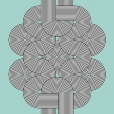
‘Swooping, sub-heavy sci-fi from Riz Maslen, under a new moniker.
‘Heavy-lidded and ethereal, its balance of bass weight, mechanical metre, and darkly tinted new age feels like a cinematic re-approach to some of the textures, moods, and themes of her 1996 Laundrophonic maxi, under the alias Neotropic.
‘Stairway 13 folds in decades of experience in sound design and theatre, along with shards and elements abstracted from Riz’ more recent folk-like music, zoning into a deep, retreated, altogether dreamlike and expansive atmosphere. The scale and soundscape is reminiscent of Geinoh Yamashirogumi and their Ecophony album series, resonating to similar frequencies and exploring themes of chaos and rebirth in feature-length form.
‘The four parts spread and swoop as single extended sides across this double LP. Carried by waves of sub bass and heavenly chorus, and later punctuated with autonomic clicks of machinery, whirrs, and pulses, the work forms a gothic, otherworldly ambience. A subtle space opera.’
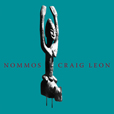
Terrific album, originally out on Takoma in 1981 — an edgy, angsty, spiritual mix of Suicide, Cluster, La Monte Young, Terry Riley, West African rhythms… which still sounds bang up to date. Hotly recommended.
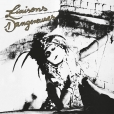
Notorious, seminal electropunk from 1981 — Beate Bartel from Einstürzende Neubauten and Chrislo ‘DAF’ Haas, with vocalist Krishna Goineau — which coursed into Chicago house and Detroit techno. Undiminished; still vital.

Startling, exhilarating concrete music by this experimental Canadian film-maker, beloved of Stanley Kubrick and George Lucas. (A homage to him is embedded in Star Wars.)
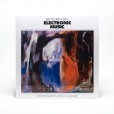
Three rare recordings by this pioneer of early Danish electronic music — compelling, often dazzling, but focussed and without bombast.
‘Electronic Music was originally released in 1987 as a retrospective album, collecting three of Bent Lorentzen’s electronic works from the 70s. These clearly demonstrate Lorentzen’s close familiarity with his equipment and his great technical proficiency regarding the creation and manipulation of all sorts of electronic and recorded acoustic sounds — typically in the form of speed changes, reversed sounds, and reverb and filter effects. The music is often quite dramatic with distinct narratives and multiple dynamic layers of sound, but still with a clear sense of disposition and restraint, possibly stemming from Lorentzen’s experience with classical instrumentation and orchestration.’
Fastidiously prepared and stylishly presented by IDL, as per.
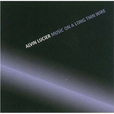
Fifty feet of wire, miked at both ends, passing through the poles of a large magnet, set vibrating four times at four different frequencies, in complex, evocative, ethereal chords.