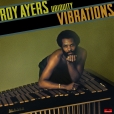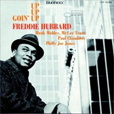
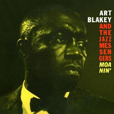

Superb organ jazz from 1965, with Grant Green, Bobby Hutcherson and Otis Finch. Latona was the Jazz Dance weapon; One Step Ahead is knockout, too. A classic Blue Note.
‘Ultimate HQ CD’ from Japan, using the same Craft transfers and mastering.
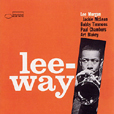
Triumphant risk-taking from 1963 — in the same group of key, reaching Blue Notes as Unity and Dialogue — showcasing the great trombonist’s own tricky, moody, shape-shifting compositions, including a strongly evocative Monk tribute. It’s thrilling to hear Lee Morgan stretch out like this; Jackie Mac really goes for it, too. Not to mention Bobby Hutcherson, Bob Cranshaw and the dazzling drumming of Tony Williams, just seventeen.
‘Classic Vinyl Series.’ ‘Ultimate HQ CD’ from Japan, using the recent Craft transfers and mastering.
‘Ultimate HQ CD’ from Japan, using the recent Craft transfers and mastering.
Unmissable Jimmy Smith. With Stan The Man and Kenny Burrell, the perfect foils, in 1963.
The LP is in Blue Note Classic Vinyl series: ‘all-analogue’, mastered by Kevin Gray from the original master tapes. The ‘Ultimate HQ CD’ is from Japan, using the recent Craft transfers and mastering.
‘Classic Vinyl.’
‘Classic Vinyl.’
‘Classic Vinyl.’
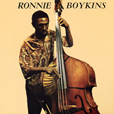
His only recording for Verve, from 1967. Check the lineup: Lonnie Liston Smith, Ronnie Boykins, and Grady Tate. This is where Kirk starts to get his groove on. Next stop, Blacknuss. Terrific version of Alfie.
Available for the first time since its original release in 1980, this is compelling, funky, exploratory jazz from Melbourne, Australia.
The album opens with the floating Song For Bobby, a downtempo gem with the heartbeat aura of Herbie Hancock’s Butterfly; Orchestral Excerpts (From The Symphony Of Life), In The Basement and City Of Stone are high-grade fusion jams with one eye on Weather Report and Return to Forever, the other on the organic Australian sound of Alan Lee and John Sangster. The album closes out with the completely improvised Universal Suite, a 17-minute excursion which begins with a cinematic opening reminiscent of electric Miles at his most introspective before taking flight on passages of hard-driving Latin percussion, shimmering fusion and gritty funk. Slick, cultured and in close dialogue with the most advanced sounds of the era, Pyramid documents one of Australia’s great fusion bands at the height of their powers.
Ace, key DB. ‘The perfect bridge between his spacey late-60s attempts to mimic Miles, and his tighter early-70s jazz-funk with the Mizells.’ Trumpet-tenor-flute; Duke Pearson on electric piano.
Five-star business. With James Spaulding, Freddie Hubbard, Herbie Hancock, Ron Carter and Joe Chambers, in 1965. The first side is all Hutcherson compositions — including Little B’s Poem, his lovely signature tune, written for his toddler Barry — the second all Chambers’, more abstract and reaching.
‘These seriously playful/playfully serious gentlemen share the same vibe: a strong sense of speed and importance, paired with a kind of childlike curiosity for what lies behind the next bend. Alternating between baritone saxophone, flutophone, slide flute, clarinet and bass clarinet, phrases are repeated and elaborated, questions, answers, rhetoric, ornamentation, criticism, and free flow, all this and more can coexist when it comes from the same source.
There is a lot of commotion in this music, a lot of pressing and panting. But there are also feelings in the brutality, a brutal finesse that leads us from one sonic landscape to another. Not like a hike, more like a run through forests and scrubs, down steep slopes and up through narrow gorges…’
‘Warm, mysterious and alluring, the Trio’s debut album maintains a balanced interaction at once intimate and almost limitlessly expansive. The leader’s unmistakable tone and improvisational verve are naturally a focal point, but there is no doubt that we are dealing with a proper band. Cellist Joel Ring and drummer Øystein Aarnes Vik are masterfully light-footed and tight, calmly driving the music forward, filling it with colour and texture… and still there is room for the influential Norwegian pianist Jon Balke, who guests on three tracks.
‘The compositions are strong, immediate and captivating. For all its eccentricities, the music has a broad, timeless appeal, running from the distant past far into the future. It takes you by the hand, to show you that the world is still a magical and enchanted place.’
Live at the Lila Eule 2018.
‘The French jazz magazine Citizen Jazz acclaimed Marthe’s debut album Asura, in 2021, singling out her ‘ability to hold disparate idioms together, to mix a whole bunch of influences (musical or not) in the crucible of her own personality, of her own history, to bring out a great personal and extraordinary whole, a fresh and singular music which belongs only to herself.’
‘This follow-up maintains the same life-affirming energy. It explores new nooks and crannies in the same wonderful universe. Again, it ranges widely, with the same free approach to composition. Some of the tracks make it impossible to keep your dancing feet still, while others give room for introspection and reflection.
‘Herlighetens Vei — Path of Glory — conveys a humble and respectful attitude to Life. It avers that human existence is sacred and mysterious. Keep an open and alert mind, and the mystery will naturally unfold before you.’
‘The saxophonist leading a septet into fascinating, playful and sparky combinations of contemporary music, avant-garde jazz, techno, and improv; a kind of seance summoning the wailing fairy of Irish folklore, a shrieking harbinger of death.’
‘Hans Hulbækmo and Egil Kalman have long been a playful and creative rhythm section, with one foot in free jazz and the other in folk music. They’ve played together in the Marthe Lea Band and other projects, and since last year they’ve delved into the folk music of Norway and Sweden — all set in an experimental duo format. Drums and jaw harp (Hans) meet modular synth and double bass (Egil).
‘Unit of Time draws from the rhythmic details of folk music, as the basis for minimalist compositions full of improvisation. It’s not all about the groove, though. Some melodies are interpreted straightforwardly enough, but the unconventional instruments give the music a new depth. Unusual timbres and sonic phenomena emerge, mesemerizingly.’
The Chicago-based poet and singer heads up a spicy gumbo of jazz, folk and soul.
‘By merging ferociously honest poetry with various black musical traditions, Tate stands as heir to Chicagoan Oscar Brown Jr., the veteran urban griot whose lyrics long have decried racism and social injustice’ (The Chicago Tribune).