
Your basket is empty

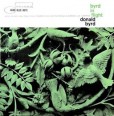
Ace hard bop from 1967, elegantly alternating bluesy with modal. Cedar Walton, Billy Higgins, and the excellent Sonny Red. The title track is extended, sultry and grooving; and there’s a version of the dancer Book’s Bossa.
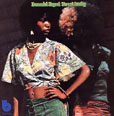
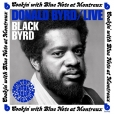
Dazzling, foundational jazz-funk from 1973, with Larry Mizell back at the desk (after Black Byrd), featuring killers like Lansana’s Priestess — as sampled by Theo Parrish on his Baby Steps EP — and the title track, with hot flute by Roger Glenn, and a smack of Curtis to its vocal chorus. Superior pressing; gatefold sleeve.
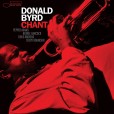
1961 session with Pepper Adams and Herbie Hancock. Kicks off with I’m An Old Cowhand… always a winner.
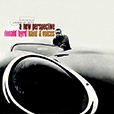
With Herbie, Mobley and co — and an eight-person gospel choir — in 1963.
The stand-out is a version of Duke Pearson’s Cristo Redentor. A fail-safe at funerals.
‘Classic Vinyl Series.’

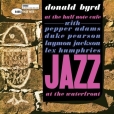
‘One of the most essential hard bop purchases in the canon. The performances by Duke Pearson — four of his own tunes, five by Byrd, and standards — showcase his improvisational acumen at its height. His soloing on studio records pales in comparison. This was a hot quintet, that not only swung hard, but possessed a deep lyricism and an astonishing sense of timing’ (Allmusic).
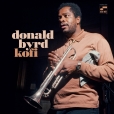
Ace, key DB. ‘The perfect bridge between his spacey late-60s attempts to mimic Miles, and his tighter early-70s jazz-funk with the Mizells.’ Trumpet-tenor-flute; Duke Pearson on electric piano.

‘Classic Vinyl’ series.
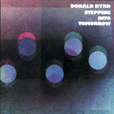
‘Classic Vinyl.’
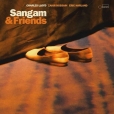
‘Charles Lloyd pays homage to his dear friend and longtime collaborator, master-tablaist Zakir Hussain. The album is built around studio recordings made in Mumbai in 2009 for an interrupted project featuring an expanded ensemble with drummer Eric Harland, Carnatic singer Vijay Prakash, Rakesh Chaurasia on bansuri, Sabir Khan on sarangi, Ranjit Barot on keyboard, and Niladri Kumar on sitar.’

With Pharoah Sanders, Henry Grimes and Ed Blackwell, in 1966.
‘Sanders’ mix of Coltrane’s yearning long notes, Ayler’s ghostly, fluttering wail, Coleman’s fast, bumpy phrasing and his own manic bagpipe screams certainly separates the faint-hearted from the stayers on the opening Awake Nu. But the conversation between Sanders and Cherry is light, lyrical and engaging on The Thing, and the saxophonist even gets into a stubborn, Sonny Rollins-like repeating Latin vamp on There Is the Bomb. An unflinchingly quirky classic’ (The Guardian).

DC’s first album as leader, after leaving the Ornette Coleman Quartet. Two side-long suites, recorded in single takes on Christmas Eve, 1965. Bristling with creativity, rammed with great tunes and brilliant solo spots. Cherry plays cornet, alongside Gato Barbieri, Henry Grimes and Ed Blackwell. In the same year as his own debut as leader — The Call for ESP — Grimes is terrific.
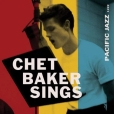
This 1954 vocal LP was the trumpeter’s idea. Pretty much everyone in the studio was sceptical, but Baker stuck to his guns during the numerous takes required to iron out his tuning. ‘I thought it was bullshit,’ recalled his close collaborator, pianist Russ Freeman. ‘Louis Armstrong and Jack Teagarden sang like jazz singers. This was ballads. Totally meaningless.’ Metronome magazine pilloried Baker’s ‘abysmal vocal deficiencies’, like ‘a four-month-old baby’s lack of coordination because he can’t walk.’
Punters loved it. The same year, audience polls in Down Beat magazine made him best trumpeter and best vocalist, above Miles Davis and Nat King Cole. This LP became his best-seller, over the decades. Its version of My Funny Valentine is arguably definitive.
The sexual and racial politics of its reception run fascinatingly deep. Baker’s ‘white’, ‘effeminate’ singing style demurs a throw-down with ‘expressive’, ‘black’ machismo. (Bob Dorough, Mose Allison, and Michael Franks are fellow travellers.) ‘A lot of people thought — foolishly so — that because of the way I sang, I, y’know, liked fellas or something,’ Baker once remembered, nervously. According to his biographer James Gavin, the album made him the first jazz musician with a ‘strong homosexual following’. Pacific Jazz producer Dick Bock’s marketing survey in 1955 found that most of Baker’s fans were women who wanted to hear him sing. It was a massive hit in Brazil, too, coursing into the bossa nova movement via admirers like Joao Gilberto and Nara Leao.
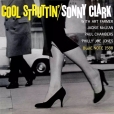
It’s a must. The bluesy, grooving title track is essential Sonny. With Art Farmer (playing superbly), Jackie McLean, Philly Joe Jones and Paul Chambers.
Blue Note Classic Vinyl series: all-analogue, mastered by Kevin Gray from the original master tapes.
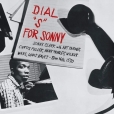
‘Classic Vinyl Series.’
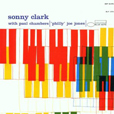
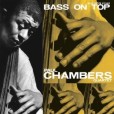
The 1957 recording with Paul Chambers and Philly Joe Jones.
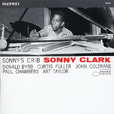
Kind of a dry run for Blue Trane, a couple of months later: with JC, Byrd, Curtis Fuller, Paul Chambers, Art Taylor; a latinized Speak Low, and SC’s own, wicked News For Lulu.
‘Classic Vinyl.’
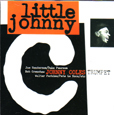
The fine trumpeter in 1963 — fronting a cor-blimey line-up of Joe Henderson, Duke Pearson and Pete La Roca — when he was with Gil Evans, years before stints with Mingus, Herbie, the Duke, Blakey.
‘Classic Vinyl Series’.