




Your basket is empty

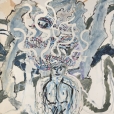
‘Recordings from early 2025, while Johnny was bed-bound in an assisted living facility with multiple sclerosis. He speaks into an iPhone laid gently on his chest, in remarkably tender and emotive form. Love in all its permutations. The tangled, but caring nature of familial love, to the anguish and euphoria of romantic connection. Johnny has a remarkable ability to pose questions, and answers, that reflect the truest of realities, without cliche.
‘Joel Nelson nimbly helms the nearly entirely electronic backdrop, with Buchla Music Easel bubbling up between Johnny’s stream of consciousness. At times, Broadcast’s fuzzed out ballads come to mind, while at others, early Oneohtrix Point Never’s gauzy, distant drones cast anchor beneath the slippery syntax.’
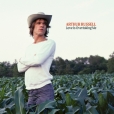
Twenty-one songs, running right back to 1971: assured, lovely, intelligent, good-humoured singer-songwriting, mixing up Americana, folk, pop, art rock, and gentle experimentalism.
Originally released in 2007 this redux edition includes new masters from a recently found pristine tape reel and was remastered by Timothy Stollenwerk at Stereophonic Mastering in Portland, OR. Revised artwork; extensive liner notes by Arthur’s partner Tom Lee.
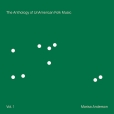
Nine tunes copped from the archives of the legendary 78s collector Harry Smith — ‘pointedly taken from regions shaped by major US conflicts since Anderson’s birth in 1970. While her fascinating liner notes track what is lost and found when trying to translate these compositions, their universal musicality still cuts through. Opener Quodlibet is beautiful: an intricate, minor-key medley of Uzbek tunes originally performed on the dambura (a fretless lute), on which Anderson adds bluegrass techniques to counter her inability to play quarter-tones on her guitar. Her take on a qawwali vocal tune, Hamd, is also a highlight, her stacked guitar layers ringing with warmth and emotion. Gisela Rodríguez Fernández adds violin to Sarvi Simin, a shimmering tune from Soviet-era Afghanistan, while a Yemeni tune, Zar, intended to exorcise evil spirits from the sick, sees Anderson and Fernández constantly rearranging five notes without repetition. Dark ambient moods are also conjured in Pair of Duduk, on which Anderson shifts the drones of Armenian woodwinds on to reverb-heavy guitar and bassy synths, while in Vietnamese tune Whistle Song, transferred from bamboo flutes to electric piano, the composition’s closeness to minimalism sings out.’
Wonderful. Here’s to volume two.
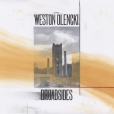
‘A psychoacoustic odyssey through the American South, influenced as much by Dock Boggs as by Luc Ferrari. This isn’t ‘avant-folk’ as per, but more expansive avant-garde compositions using components of traditional music as tools for storytelling. There are banjos, but they bounce around the stereo field in hypnotic patterns; there are autoharps, but they’re bowed, left detuned by time and humidity, and augmented with sounds of screeching cicadas.
‘Check out the haunted, ambient interpretation of the murder ballad Omie Wise, featuring fourteen different versions of the song time-stretched and overlaid with pedal steel by Tongue Depressor’s Henry Birdsey. It’s a wild listen!’
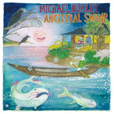
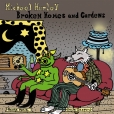
Laid-right-back — with old buddies Dave Reisch and Lewi Longmire, and Tara Jane O’Neil; a Blind Willie McTell and a Lightning Hopkins; and unmissable goes at favourites like Light Green Fellow. One of the very best Hurleys of them all.
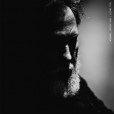
‘Returns to original composition and the blues… with a freshness and authority that nostalgic retreads cannot deliver… Three songs (Odds Against Tomorrow, The Writhing Jar, Already Old) are multi-tracked, an innovation that, for guitar buffs familiar with Orcutt’s stripped-down vernacular, jumps out of the grooves like a Les Paul sound-on-sound excursion in 1948, or a Jandek blues rave-up in 1987. Specifically evoking John Lee Hooker’s double-track experiments on 1952’s Walking the Boogie, the steady chord vamps of Odds Against Tomorrow and Already Old form a harmonic turf on which Orcutt solos with lyrical abandon. The Writhing Jar’s crashing overdubs recall the brassy six-string voicings of This Heat or Illitch. With the exception of the unreconstructed Elmore James-isms of Stray Dog’ and the Layla-finale-like haze of All Your Buried Corpses Begin To Speak, the remaining non-overdubbed tracks dovetail snugly with Orcutt’s previous solo output, reeling gently in a Mazzacane-oid mode or vibing up the standards (Moon River)... Odds Against Tomorrow challenges contemporary solo guitar practice in a way that simultaneously nullifies hazy dreams of folk purity and establishes a new high-water mark for blues-rock reconstruction” (Tom Carter).
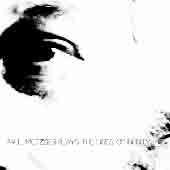
‘A 6 part cosmic hobo’s dream suite for 23 string banjo… Metzger plucks, picks, bows and spins his way through a 40 minute odyssey making for his most ambitious and adventurous musical trip to date.’
We ship worldwide. The postage rates for your order are displayed before payment, which is processed using Paypal. You can pay using your Paypal account or any of the following cards. No need to join Paypal.
