
Honest Jons logo

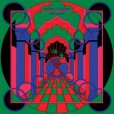
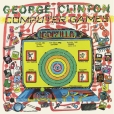
Blissed-out, refined electronica, with synths, piano, and guitar, from 1976.
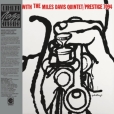
The numbered, 50th Anniversary edition of the LP.

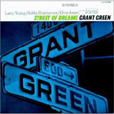
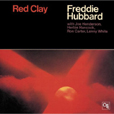
Ace, key DB. ‘The perfect bridge between his spacey late-60s attempts to mimic Miles, and his tighter early-70s jazz-funk with the Mizells.’ Trumpet-tenor-flute; Duke Pearson on electric piano.

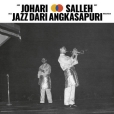
‘These seriously playful/playfully serious gentlemen share the same vibe: a strong sense of speed and importance, paired with a kind of childlike curiosity for what lies behind the next bend. Alternating between baritone saxophone, flutophone, slide flute, clarinet and bass clarinet, phrases are repeated and elaborated, questions, answers, rhetoric, ornamentation, criticism, and free flow, all this and more can coexist when it comes from the same source.
There is a lot of commotion in this music, a lot of pressing and panting. But there are also feelings in the brutality, a brutal finesse that leads us from one sonic landscape to another. Not like a hike, more like a run through forests and scrubs, down steep slopes and up through narrow gorges…’

Microtonal folk music mixed with electronics and noise.
The first record was rave-reviewed.  ‘I was transported to secluded valleys where age old traditions are the passionate expressions of a community, here re-energized by the chillingly sensitive electronic wizardry of Anders Hana and Morten Joh’ (Songlines). At home in Norway even the tabloids picked it up: ‘Gorrlaus has the same intense and monotonously suggestive sound hunt as early Kraftwerk, at the time they played Ruckzuck’ (VG).
And now II is a next step further in the same direction, more deeply attuned to diverse materials derived from field recordings and other research, with finer nuance and detail… and more fiddle.

‘Warm, mysterious and alluring, the Trio’s debut album maintains a balanced interaction at once intimate and almost limitlessly expansive. The leader’s unmistakable tone and improvisational verve are naturally a focal point, but there is no doubt that we are dealing with a proper band. Cellist Joel Ring and drummer Øystein Aarnes Vik are masterfully light-footed and tight, calmly driving the music forward, filling it with colour and texture… and still there is room for the influential Norwegian pianist Jon Balke, who guests on three tracks.
‘The compositions are strong, immediate and captivating. For all its eccentricities, the music has a broad, timeless appeal, running from the distant past far into the future. It takes you by the hand, to show you that the world is still a magical and enchanted place.’

Five-star business. With James Spaulding, Freddie Hubbard, Herbie Hancock, Ron Carter and Joe Chambers, in 1965. The first side is all Hutcherson compositions — including Little B’s Poem, his lovely signature tune, written for his toddler Barry — the second all Chambers’, more abstract and reaching.

Tense, textured, classy minimalism from Al Wootton.

Nine tunes copped from the archives of the legendary 78s collector Harry Smith — ‘pointedly taken from regions shaped by major US conflicts since Anderson’s birth in 1970. While her fascinating liner notes track what is lost and found when trying to translate these compositions, their universal musicality still cuts through. Opener Quodlibet is beautiful: an intricate, minor-key medley of Uzbek tunes originally performed on the dambura (a fretless lute), on which Anderson adds bluegrass techniques to counter her inability to play quarter-tones on her guitar. Her take on a qawwali vocal tune, Hamd, is also a highlight, her stacked guitar layers ringing with warmth and emotion. Gisela Rodríguez Fernández adds violin to Sarvi Simin, a shimmering tune from Soviet-era Afghanistan, while a Yemeni tune, Zar, intended to exorcise evil spirits from the sick, sees Anderson and Fernández constantly rearranging five notes without repetition. Dark ambient moods are also conjured in Pair of Duduk, on which Anderson shifts the drones of Armenian woodwinds on to reverb-heavy guitar and bassy synths, while in Vietnamese tune Whistle Song, transferred from bamboo flutes to electric piano, the composition’s closeness to minimalism sings out.’

Wonderful. Here’s to volume two.

‘In the thirteen years since Voices From The Lake I, the duo has performed worldwide, released a handful of EPs, worked on installations, and founded record labels, all while continuing to refine the project’s unique identity. Its core has always been its deep, aqueous approach to sound, a sensibility that returns in full force on II. “The project was never meant to become what it did. At one point, we even paused it. Only to later embrace it in all its forms. II is both a continuation and a reinvention.” True to that spirit, Voices From The Lake have explored extremes in recent years, from high-tempo live sets to seated listening concerts, while remaining anchored in the meditative pulse of ambient techno. II extends this lineage, carrying forward the immersive sound design and boundary-pushing vision that has defined their work from the beginning.’

1234