





Your basket is empty

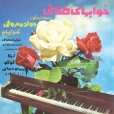
‘The pianist and composer Javad Maroufi (1925-1993) is the great interpreter of Iranian classical music. His repertoire defines a precise encounter between Western classical music and the traditional folklore of his homeland. Through his academic training, he absorbed the lessons of the works of Chopin, Mozart, Bach and Beethoven, but his refined pianism echoes and reinterprets the popular melodies of ancient Iran. A profound and delicate song of the drama of life; joys and sorrows, dreams and desires. The sublime and soft touch of trills and arpeggios become pure introspection and a mirror of the soul. These are romantic poems that seem to narrate memories, losses, farewells, poverty or happy visions. Sad rhapsodies, laments, ballads, nocturnes resigned to calm and solitude. A hymn to nostalgia that also recalls the soliloquies of Ethiopian pianist Emahoy Tsegue and Satie’s symbolic twilight.’
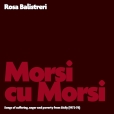
Rosa Balistreri
Morsi Cu Morsi (Songs of Suffering, Anger and Poverty from Sicily 1972-78)
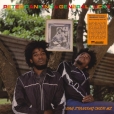
Black Sweat
Searing, super-soulful testament and protest. This is terrific. Check it out.
‘Rosa Balisteri was one of the brightest stars on the Italian folk scene of the 1960s and 1970s, certainly far too little known given her talent and expressive power. Through her songs, she relives the suffering and despair wrought by the devastating challenges and trials of her harrowing life. The ancient, expressive power of her dialect stirs the emotions, exuding anger and pain, but also love and devotion. Through her, all of Sicily sings, all the marginalized people, peasants, miners, wagoners. She belongs with the historic voices of American blues, the great folk singers of the 1960s such as Odetta and Joan Baez, and South American heroines like Violeta Parra and Mercedes Sosa.’
With a twenty-page booklet including life-story and lyrics.

‘Across nine beautifully crafted songs, Joyce pairs intricate guitar work, lyrical intimacy and effortless swing with the musical curiosity that has defined her work for more than half a century.
‘Tutty Moreno’s expressive drumming underpins Joyce’s vocals and guitar throughout, while Jorge Helder’s bass, Lula Galvão’s guitar and Marcos Nimrichter’s warm Fender Rhodes create a sound that is both intimate and expansive. Contributions also come from the legendary Toninho Horta, alongside José Arimatéa, Teco Cardoso, Nailor Proveta, Josué dos Santos and Raphael Sampaio, whose additions add colour and texture without overshadowing Joyce’s understated brilliance.
‘Watch out for the fresh new arrangement of Aldeia de Ogum, one of Joyce’s most beloved compositions, an underground favourite among DJs including Floating Points and Four Tet.’
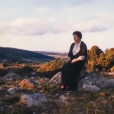
Beautiful cantu a chiterra from northern Sardinia. Now over eighty years old, Pirrigheddu is one of its all-time great interpreters; in collaboration here with young composer Vieri Mura.
Surely The Guardian is bang on: ‘The year’s best folk album. How staggering for traditional songs to taste so like fresh blood: stunning, brutal and unforgettable. *****’
Classic, deep UK house from 1990. Lovely stuff. That’s Robert Owens on the flip.

Four concert performances — Antwerp, Karlsruhe, Paris & Copenhagen — beautifully remastered.
‘Critically and popularly acknowledged as one of the most creative and influential ensembles in the history of jazz, these live recordings from their European and Scandinavian tour of October and November 1967 should be considered the final chapter in the metamorphosis of the classic Second Quintet.’

‘The Italian ambient maestro’s 1986 debut, remastered and restored for its 40th anniversary. A peerless infusion of minimal piano, free classical, and balearic new age, Wind is the aural equivalent of swimming alone at night. Housed in a tip-on jacket with the Bear In Heaven issue’s original iconography in reflective silver foil.’

Cosmic, electronic, futuristic dabke, by the Casio and synths whiz behind Omar Souleyman’s sound.
‘Blending syncopated dabke rhythms with glittering electro melody and clattering drum programming… infectiously upbeat and frenetically joyful’ (The Guardian).
‘There are moments of dancefloor abandon on Beyond Shaabi but it contains multitudes. Fiddly high-end keyboard rhythms have always made for showstopping solos in Said’s hands, but on Choubi Kawniyya they work just as well as drones, too. Swampy and ominous. On the languid three-minute intro to Naba Kurdi the twiddly keyboards sound more like guitars being shredded in service of prog-rock euphoria, while Mawwal Al Ather sees rhythms eschewed altogether – fizzy synth-flutes betwixt vast steppes of reverb, its one big foggy drone collage.
‘An emphasis on swelling, shifting textures during slower moments instills proceedings with real character amid the floor-fillers. Some cuts here even feel like the Syrian iconoclast’s experimental take on dabke is having its IDM moment. A Selected Ambient workout, dance music but for the brain – headphones wedding music. As well as serving as a palette cleanser, this locked-in textural focus means that – when they do come – the pumping polyrhythmic bangers hit harder than ever before.
‘Beyond Shaabi’s experimentation is welcome, but reassuringly, the lifeblood of Rizan Said’s music remains the fantastic free-flowing stream of dance music. After its digi-prog wig-out intro, Naba Kurdi thunders into the same high-BPM territory occupied by Egyptian electroshaabi – screaming electronics and galloping percussion – while the seven sweaty minutes of Baladi Aajil don’t let up for a second. You feel like you’re dancing and prancing through dozens of different rooms, as Said cycles through an array of different voicings on his keyboard – truly breathless stuff’ (The Quietus).

Funky highlife from Benin City, produced by the legendary Victor Uwaifo.
Hypnotic polyrhythms, reverb-soaked guitar and joyous call-and-response vocals luxuriate across two side-length medleys.
Hiss Is Bliss meets Murray Man.