





Your basket is empty

Honest Jon's has enrolled with the European Union 'Import One-Stop Shop'. For EU customers, this means that you will not be charged any additional VAT or duty, nor any handling fees. No further costs.

Upsetters
Black Board Jungle
Upsetters / Week-End
At last a worthy reissue of this awesome, monumental masterpiece from way back in late 1972.
Black Board Jungle rounds up masterful dubs of some of the deadliest Upsetters 45s of the preceding couple of years. It’s expertly selected, paced and shaped; not a stop-start compilation. It kicks off with an audacious, one-two knockout: a wildly creative, staggering version of the jaw-dropping Bucky Skank instrumental, followed by a call-the-undertaker, trombone-led, jazzbo rewind. The almighty Words Of My Mouth rhythm is here… Dreamland… Dub Organizer… Place Called Africa… Fever…
The dazzling genius of Lee Perry and King Tubby in full effect; no prisoners taken.
You might be thinking yeah but I’ve already got a copy of this… but the chances are it’s dubiously licensed, with pedestrian sound, and naff, incongruous artwork. Abjectly — not least for an album originally entitled Upsetters 14 Dub — it probably has just twelve tracks. The thumping, juddering dub of The Hurricanes’ killer You Can’t Run has gone walkies. Pure fire. Also a dub of Shenley Duffus’ smash-hit do-over of William Bell’s I Forgot to Be Your Lover… forgotten.
Be thankful for what you got, here they are, both duly restored.
This new iteration is classily presented, with debossed cover and lovely labels, and a substantial booklet. The clicks in the deposed Clocktower reissue are gone; the sound in general is less compressed, and markedly superior. The kitsch artwork is thrown out of class.
CALLING THE MEEK AND THE HUMBLE, WELCOME TO BLACKBOARD JUNGLE. SO DON’T YOU FUMBLE, GIVE YOUR CLOCKTOWER TO THE JUMBLE.
Or maybe you’re new to this album; in that case we’re dead envious.
Either way, do yourselves a no-brainer of a favour.
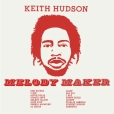
A stupendous haul of early-seventies KH productions, stuffed with crucial classics, loads of them new to CD.
Forty-nine tracks!
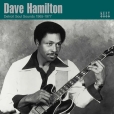
More gems from the vaults of Dave Hamilton, mainstay of Detroit music from the forties through to the eighties.
‘You Got Me Where You Want Me by Chico & Buddy is a fabulous funky number from around 1970 that would have been a soul fan’s favourite whenever it was issued. This is its first public appearance.
‘Funk crosses over to all dance scenes these days and even jazzier tracks like Hamilton’s own Soul Suite, a close relation of his coveted Pisces Piece will pick up plays now it is on vinyl.
‘Northern soul lovers have been demanding JT Rhythm’s I Love The Way You Walk on a seven, as have Motown connoisseurs Rita DuShay’s original of All I Need (Steal Away Tonight), as covered by Barbara McNair on her 1966 Motown LP.
‘Original copies exist of the Ravins’ fast and furious dancer Your Love Is What I Want, but you’ll need several grand to spare.
‘OC Tolbert’s tough and menacing delivery of the Clarence Reid song Along Came A Woman has huge dancefloor potential, like Dave’s own bluesy vocal on his similarly gritty, R&B composition Take Care Of Your Own Business.
‘Dave’s accomplishments into the 70s and 80s are admired by modern soul lovers and Ride The Disco Train by the Moderations hits a perfect groove. Both the Felecia Johnson and New Experience tracks thrive in the laid-back atmosphere Dave was able to conjure up in his home studios.
‘Fresh mastering of both of Little Ann’s uptempo and ballad classics What Should I Do and Deep Shadows seals the deal.
‘An irresistible homage to the unsung heroes of Detroit Soul music.’

Killer record. Banging, complex Mardi Gras rhythms; mesmerising, in-your-face, call-and response vocals. Full-on New Orleans funk.
Scorcher.

Cosmic, electronic, futuristic dabke, by the Casio and synths whiz behind Omar Souleyman’s sound.
‘Blending syncopated dabke rhythms with glittering electro melody and clattering drum programming… infectiously upbeat and frenetically joyful’ (The Guardian).
‘There are moments of dancefloor abandon on Beyond Shaabi but it contains multitudes. Fiddly high-end keyboard rhythms have always made for showstopping solos in Said’s hands, but on Choubi Kawniyya they work just as well as drones, too. Swampy and ominous. On the languid three-minute intro to Naba Kurdi the twiddly keyboards sound more like guitars being shredded in service of prog-rock euphoria, while Mawwal Al Ather sees rhythms eschewed altogether – fizzy synth-flutes betwixt vast steppes of reverb, its one big foggy drone collage.
‘An emphasis on swelling, shifting textures during slower moments instills proceedings with real character amid the floor-fillers. Some cuts here even feel like the Syrian iconoclast’s experimental take on dabke is having its IDM moment. A Selected Ambient workout, dance music but for the brain – headphones wedding music. As well as serving as a palette cleanser, this locked-in textural focus means that – when they do come – the pumping polyrhythmic bangers hit harder than ever before.
‘Beyond Shaabi’s experimentation is welcome, but reassuringly, the lifeblood of Rizan Said’s music remains the fantastic free-flowing stream of dance music. After its digi-prog wig-out intro, Naba Kurdi thunders into the same high-BPM territory occupied by Egyptian electroshaabi – screaming electronics and galloping percussion – while the seven sweaty minutes of Baladi Aajil don’t let up for a second. You feel like you’re dancing and prancing through dozens of different rooms, as Said cycles through an array of different voicings on his keyboard – truly breathless stuff’ (The Quietus).

‘The Italian ambient maestro’s 1986 debut, remastered and restored for its 40th anniversary. A peerless infusion of minimal piano, free classical, and balearic new age, Wind is the aural equivalent of swimming alone at night. Housed in a tip-on jacket with the Bear In Heaven issue’s original iconography in reflective silver foil.’
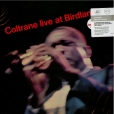
Downright essential; maybe our favourite of all his LPs.
It opens with a ravishing, buoyant version of Mongo Santamaria’s Afro Blue. Followed by a rawly soul-searching performance of the ballad I Want To Talk About You, with Trane pouring his heart out entirely solo for most of the second half. Hold tight.
Alabama is JC’s response to the Birmingham church bombing by white supremacists, just weeks earlier. ‘It is a striking piece of music,’ Ben Ratliff has written. ‘If anyone wants to begin to understand how Coltrane could inspire so much awe so quickly, the reason is probably inside Alabama. The incantational tumult he could raise in a long improvisation, the steel-trap knowledge of harmony, the writing—that’s all very impressive. But Alabama is also an accurate psychological portrait of a time, a complicated mood that nobody else could render so well.’
‘One of the most baffling things about America is that despite its essentially vile profile, so much beauty continues to exist here,’ observes the poet LeRoi Jones in his sleevenotes.
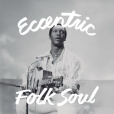
More understated and introspective than full-on Soul Music proper, more attuned to micro than macro power struggles, and more-heart-to-heart, with a traditionalist sense of song craft.
Another deeply satisfying, expertly quarried compilation in this ace series, stuffed with new discoveries.
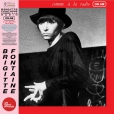
Live at ORTF 1969-71; plus alternate & instrumental studio versions.

Big Hands, Soreab, and Nothus, back with a second round of urgent, tricky, darkly dystopian worries.
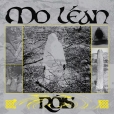
‘Anchoring the album is a desire to recontextualise the celebration of death. Drawing from Irish musical DNA — sean-nós tunes, the Irish language, the omnipresent toll of the Angelus — RÓIS carries these elements into the modern day with her unique approach to melody and production as well as her electrifying vocal performances. The album explores the Irish pagan tradition of caoineadh, or keening which was an integral part of the mourning process, during which veiled women gathered around the body to sing and howl. Taking place over several days, these wakes became joyously unruly sessions during which music, dance and storytelling emboldened the essence of the deceased as they began a new chapter in their life cycle. However, in the middle of the twentieth century, these traditions were suppressed as the Catholic Church decreed a total termination on all public lamentation. Later, the impact of colonisation sealed the fate of caoineadh through the decimation of the Irish language, and the rural communities that kept the tradition alive.
‘MO LÉAN enacts a resuscitation of the ardent rituals surrounding death, and throws open the doors which hide away such inherent and important ways of Irish life.’
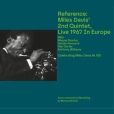
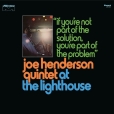
Four concert performances — Antwerp, Karlsruhe, Paris & Copenhagen — beautifully remastered.
‘Critically and popularly acknowledged as one of the most creative and influential ensembles in the history of jazz, these live recordings from their European and Scandinavian tour of October and November 1967 should be considered the final chapter in the metamorphosis of the classic Second Quintet.’
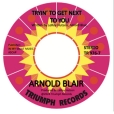
The crown jewels of bubblers’ rare groove.
In the early seventies, Arnold studied together with LeRoy Hutson at Howard University in Washington DC, before both moved on to Chicago. At Curtom, Hutson cut a series of soul masterpieces; whilst Blair - a connoisseur of the music - worked mostly behind the scenes, and occasionally as a backing vocalist. In 1975, Arnold finally got his one-and-only chance behind the mic, with this song co-written with Hutson.
Arnold smashed it. Soul perfection.
We ship worldwide. The postage rates for your order are displayed before payment, which is processed using Paypal. You can pay using your Paypal account or any of the following cards. No need to join Paypal.
