



Your basket is empty

Honest Jon's has enrolled with the European Union 'Import One-Stop Shop'. For EU customers, this means that you will not be charged any additional VAT or duty, nor any handling fees. No further costs.

'Honest Jons'
Slipping Into Darkness
Honest Jon's Records
White-to-indigo on faded bone. AS Colour heavy tee.

AS Colour box tee.

AS Colour classic tee.

AS Colour heavy tee.

AS Colour heavy tee.

AS Colour heavy L/S.
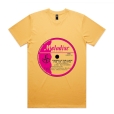
AS Colour classic tee.
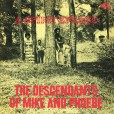
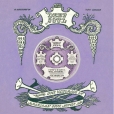
Spike Lee’s dad Bill leading three other family members and percussionists Sonny Brown and Billy Higgins, in 1973. Stone classic spiritual jazz, majestic but intimate, with touches of gospel, soul and classical music. Invoking ancestors in slavery; protesting Attica; celebrating Weldon Irvine. An unmissable version of Bill Lee’s composition Coltrane (the jewel in the crown of Clifford Jordan’s mighty Glass Bead Games, the same year).
Pressed on 180-gram vinyl at RTI, mastered by Kevin Gray (Cohearant Audio), with audio cut directly from the original analogue tapes; featuring previously unpublished photos with new liner notes in a glossy tip-on gatefold.
Nine tunes copped from the archives of the legendary 78s collector Harry Smith — ‘pointedly taken from regions shaped by major US conflicts since Anderson’s birth in 1970. While her fascinating liner notes track what is lost and found when trying to translate these compositions, their universal musicality still cuts through. Opener Quodlibet is beautiful: an intricate, minor-key medley of Uzbek tunes originally performed on the dambura (a fretless lute), on which Anderson adds bluegrass techniques to counter her inability to play quarter-tones on her guitar. Her take on a qawwali vocal tune, Hamd, is also a highlight, her stacked guitar layers ringing with warmth and emotion. Gisela Rodríguez Fernández adds violin to Sarvi Simin, a shimmering tune from Soviet-era Afghanistan, while a Yemeni tune, Zar, intended to exorcise evil spirits from the sick, sees Anderson and Fernández constantly rearranging five notes without repetition. Dark ambient moods are also conjured in Pair of Duduk, on which Anderson shifts the drones of Armenian woodwinds on to reverb-heavy guitar and bassy synths, while in Vietnamese tune Whistle Song, transferred from bamboo flutes to electric piano, the composition’s closeness to minimalism sings out.’
Wonderful. Here’s to volume two.
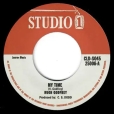
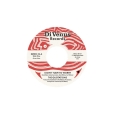
Twin detournements of Lieber & Stoller.
Hugh Godfrey coolly channels Love Potion No. 9 into a rude boy anthem, with tasty riding-east piano and full-steam-ahead saxophone.
On the flip, Norma Fraser switches the roles of the Big Mama Thornton classic. An erstwhile dawg is played by the singer. The raucous, sexually dismissive wordplay of the original — ‘You can wag your tail / But I ain’t gonna feed you no more’ — is replaced by dignified verses about female independence and resilience.
Killer 45.
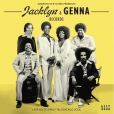
Soulful, lo-fi, Casiotone renditions of Amharic folk songs and lullabies, Tigrinya love songs, Gurage and Oromifa popular songs, and hits like Tilahun Gessesse’s Tiz Alegne Yetintu.
A landmark recording from Ethiopia’s vibrant 1980s cassette culture.
”Instrumental music, for me, is a space of reflection. Without words, the listener is invited to remember, imagine, and feel freely. In Resonance of Time, I hear my own musical philosophy: respect for Ethiopian kignit, careful dialogue with Western harmony, and a deep trust in melody as a storyteller.”
We ship worldwide. The postage rates for your order are displayed before payment, which is processed using Paypal. You can pay using your Paypal account or any of the following cards. No need to join Paypal.
